

Clear aligner orthodontics (Invisalign)
We use thin, clear aligners for Invisalign treatment, planned with iTero scanning and 3D simulation.
- If you’re concerned that your orthodontic appliance will stand out
- You want orthodontic treatment with as little disruption to work and daily life as possible
Talk to us any time
Clear aligner orthodontics (Invisalign) straightens your teeth by having you switch, in sequence, through a series of thin, clear, mouthpiece-shaped aligners. Because it uses no metal brackets or wires, the appliance is hard to notice, and because it’s removable, it’s chosen by many patients who want treatment that fits around work or school life. 高田馬場歯科・矯正歯科 offers Invisalign treatment up to the Premium package, and provides treatment suited to each patient based on precise diagnosis from our iTero intraoral scanner.
Features of our clear aligner orthodontics
Precise impressions with iTero digital scanning
We’ve introduced an iTero intraoral scanner, so we can capture 3D data of your teeth without the traditional impression material (the clay-like paste used to take a mold). Because precise data comes from simply passing the scanner over your teeth, there’s less discomfort for patients and a more accurate impression.
The data is used for Invisalign’s ClinCheck (treatment simulation). Because you can see on screen, before treatment starts, how your teeth will move, you can begin treatment already knowing roughly what the finished result will look like.
3D simulation: see the finished result before treatment
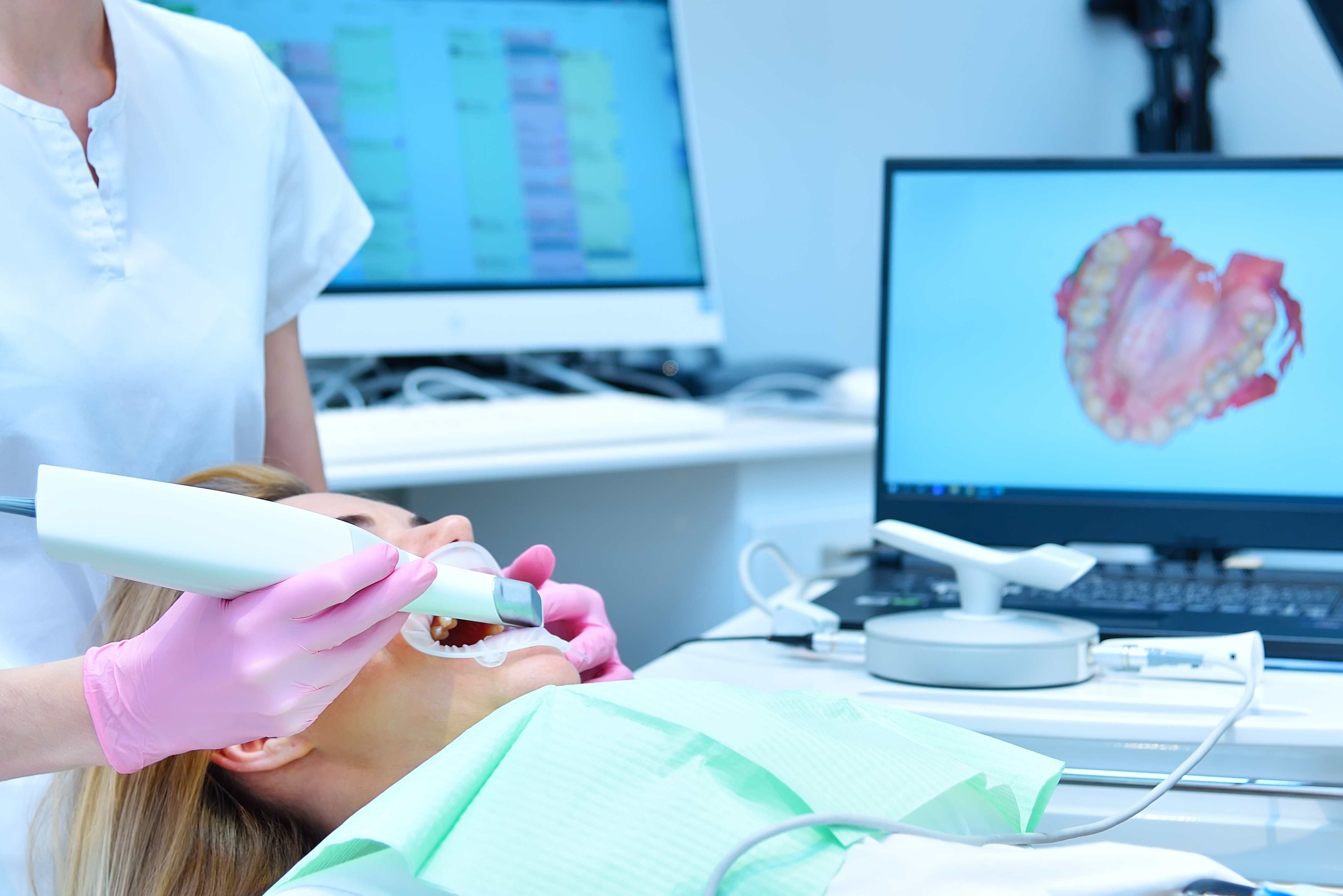
Before treatment, Invisalign creates a 3D simulation called ClinCheck. It lets you see on screen how your teeth will move, step by step, toward their final position.
For anyone who feels uneasy starting treatment without knowing what the result will look like, being able to see it in advance plays an important part in moving forward with confidence.
Right by Takadanobaba Station, for lighter visits

We’re just a short walk from Takadanobaba Station, so it’s easy to stop by on your way home from work or school. We’re open 10:00-19:00, so you can also visit on a weekday evening or during your lunch break.
Whether you live near Takadanobaba or pass through on your commute or school run, this clinic is easy to visit.
How Invisalign works, and its benefits

Invisalign is an orthodontic method that gradually moves your teeth into position by switching, every one to two weeks, through a series of computer-designed aligners.
A clear appliance that’s hard to notice
Aligners are made of a clear polyurethane-based material, so even while wearing one, it’s hardly visible from the front. A major benefit is that even people in customer-facing work, or who are often in front of others, are unlikely to be noticed as being in treatment.
Removable, so you eat and brush as usual
Aligners can be taken out for eating and brushing. Compared with fixed wire braces, this makes it easier to keep your mouth clean, which also helps lower the risk of cavities and periodontal disease during treatment.
No metal, so it’s safe for metal allergies too
Aligners contain no metal, so even patients with a metal allergy can use them with confidence.
Fewer visits, easier for busy schedules
As a guide, regular check-ups are around once every 1.5 to 3 months. Visits tend to be less frequent than with wire braces, which makes this an easier method for busy working people and students to keep up with.
Points to know about clear aligner orthodontics

Clear aligner orthodontics has many benefits, but there are also some things we’d like you to know before starting treatment.
The importance of wear time
We recommend wearing your aligner at least 20 to 22 hours a day — as a rule, keep it in except when eating and brushing. If wear time falls short, your teeth may not move as planned and treatment can take longer. Being removable is convenient, but your own awareness and habits can affect the result.
Not suitable for every case
In cases with a severe skeletal misalignment, or that need a specific, complex tooth movement, clear aligner orthodontics can sometimes be difficult to apply. Whether it suits you is decided from the results of a detailed examination, so please talk to us first.
Pressure right after a change, and the risk of losing or breaking an aligner
Right after switching aligners, you may feel some pressure or an odd sensation for a few days. Because it’s removable, there’s also a risk of losing it while out or breaking it by accident. Make it a habit to keep your aligner in its dedicated case whenever you take it out.
Comparing Invisalign plans

| Plan | Features | Number of aligners | Best for |
|---|---|---|---|
| Lite | For mild, cosmetic improvements | Up to 2 sets | Those who want a small adjustment, or are bothered by slight crowding in the front teeth |
| Standard | The standard plan for full orthodontic treatment | Unlimited | Those who want a thorough improvement to their whole bite |
| Premium | Also covers full-arch functional orthodontics | Unlimited | Those who want to address complex cases, including bite issues |
*Depending on the condition of your mouth, clear aligner orthodontics may not be suitable. Please talk to us first.
The treatment process
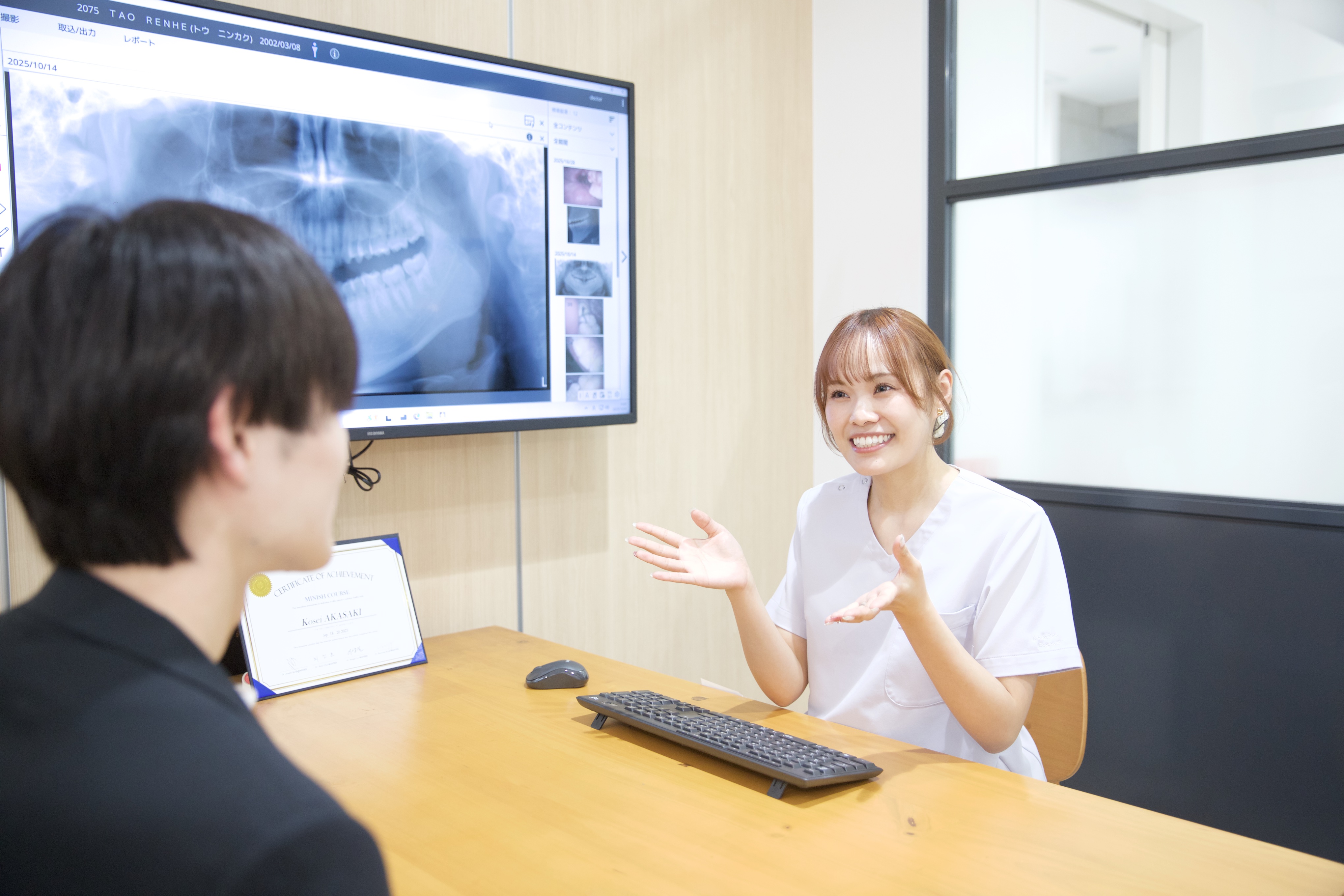
First consultation (free)
We’ll ask about any concerns or hopes you have for your teeth, and let you know whether Invisalign is suitable for you. Feel free to come in even if you’re just considering it.
Detailed examination
We take an iTero intraoral scan and X-rays, among other checks, to examine your bite and bone structure in detail.
Explaining your treatment plan
Using the data from your detailed examination, we create a ClinCheck (3D simulation). You’ll be able to see on screen how your teeth will move, and we’ll explain the treatment time and cost.
Fitting your aligners, and starting treatment
Once the aligners ordered from Invisalign arrive, we begin treatment. You’ll switch aligners every one to two weeks, and we’ll check your progress at visits roughly every 1.5 to 3 months.
Retention (retainer)
After you finish all your aligners, you’ll wear a retainer to prevent your teeth from shifting back. The length of the retention period varies by person, but please keep wearing it for the period we recommend.
Price guide
Orthodontic plans
| Plan | Price (tax included) |
|---|---|
| Invisalign Lite | ¥495,000 |
| Invisalign Standard | ¥880,000 |
| Invisalign Premium | ¥1,012,000 |
Basic and optional costs
| Item | Price (tax included) |
|---|---|
| First consultation | Free |
| Detailed examination fee | ¥44,000 |
| ClinCheck fee | ¥33,000 |
| Adjustment (per visit) | ¥3,300 |
| Retainer (retention device) | ¥55,000 |
| IPR (interproximal reduction) | ¥3,300 |
| Attachment placement | ¥3,300 |
*All of the above are private treatment (not covered by insurance).
*A dental loan is also available for installment payments.
*Depending on the case, extra costs may apply — for example IPR (a procedure that removes a small amount of enamel from the side of a tooth), ¥3,300, or attachment placement, ¥3,300.
Frequently asked questions

Is Invisalign really not noticeable?
Aligners are made of a clear polyurethane material, and many patients say that from the front, they’re hard to notice even while wearing one. That said, up close, the appliance can sometimes be seen. We often hear from patients in customer-facing work, or who are often in front of others, that no one noticed they were in treatment.
Do I have to take my aligner out to eat?
Yes, you must always take it out to eat. Eating with it in can warp or break the aligner, or trap food that leads to cavities. The same applies when eating out. As a rule, brush your teeth after eating before putting it back in.
How long does treatment take?
It varies with the case and the plan you choose, but 1 to 3 years is a rough guide. A mild improvement to the front teeth can sometimes finish in around six months to a year. We’ll explain the exact length after your detailed examination.
Does it hurt during treatment?
Right after switching aligners, you may feel pressure or a dull ache, but in most cases it settles within a few days. Many patients find it less painful than wire braces, though this varies by person. If strong pain continues, please talk to us.
What happens if Invisalign stops fitting partway through?
If your teeth aren’t moving as planned partway through treatment, we can remake your aligners (refinement). How additional aligners are handled differs by plan, so please check with us before treatment begins.