


Cavity treatment
We value precise examination using high-magnification loupes, and an MI approach to treatment that drills away as little of the tooth as possible.
- If you feel sensitivity to cold, pain, or discomfort, and aren’t sure where to go
- If you’re anxious about being told you need to “drill” or “extract”
Please talk to us first.
In its early stages, a cavity often causes almost no symptoms, and in many cases it has already progressed significantly by the time you notice it. At 高田馬場歯科・矯正歯科, we base our approach on MI (Minimal Intervention), aiming to treat with the minimum necessary intervention and save as much of the tooth as possible. With pain-conscious care using topical anesthetic and an electric injector, and precise examination with high-magnification loupes, we provide careful, attentive treatment for each patient.
Table of Contents
What sets our cavity treatment apart

MI treatment that drills as little as possible, to save the tooth
Many people think “a cavity means drilling,” but we place great importance on the idea of MI (Minimum Intervention). Once a tooth is drilled, it never grows back. We believe that removing only the infected area to the minimum extent, and preserving as much healthy tooth structure as possible, leads to better oral health in the long run.
For an early-stage cavity (at the C0 or C1 stage), instead of drilling right away, we may choose fluoride application or watchful monitoring. Rather than assuming “drilling is always the safe choice,” we place importance on judging exactly what that tooth truly needs right now.
Pain-conscious care with topical anesthetic and an electric injector
We hear from many patients that “injections are scary” or “treatment hurts, so I avoid the dentist.” At our clinic, we apply a topical anesthetic before the injection to reduce, as much as possible, the sharp sting of the needle going in.
Precise examination and treatment with high-magnification loupes
To avoid missing a small cavity that’s hard to see with the naked eye, or a subtle change in a tooth’s condition, we use 6x and 8x high-magnification loupes. Working under this magnified view lets us treat precisely the area that needs it, and nothing more.
Using magnifying loupes not only prevents any decay from being left behind, it also directly protects healthy tooth structure. This commitment to precision leads to better quality treatment and a lower risk of recurrence.
What is a cavity?
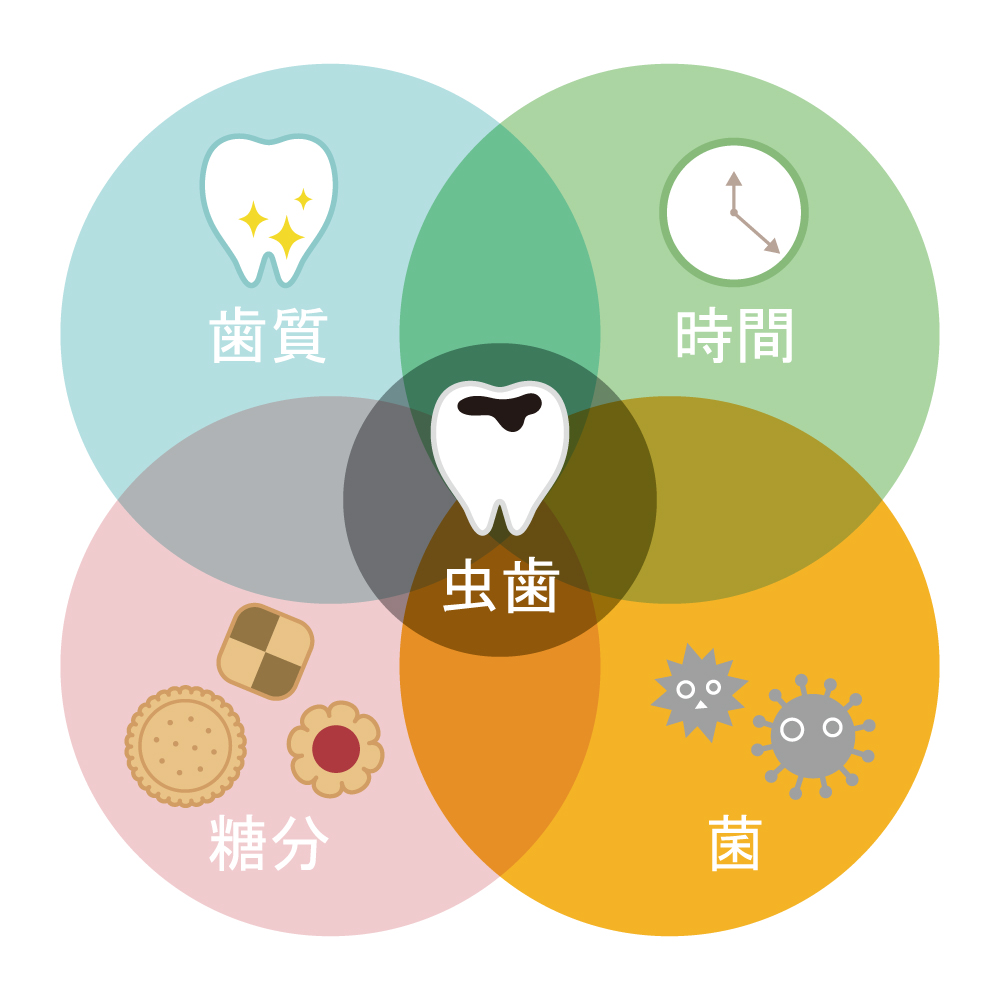
A cavity develops when bacteria in the mouth (mainly Streptococcus mutans) break down sugar and produce acid, which gradually dissolves the enamel on the tooth surface. Every time you eat, your mouth becomes more acidic, but saliva normally brings it back to neutral (remineralization). However, if you eat frequently or don’t brush thoroughly enough, this recovery can’t keep up, and the tooth keeps dissolving.
Once a cavity has progressed, it will not heal on its own, and if left untreated it will always continue to progress. Dealing with it at an early stage is the best way to keep the burden of treatment to a minimum.
Stages of cavity progression and how each is treated
Cavities are classified into 5 stages of progression, from C0 to C4. The treatment involved and how long it takes vary greatly depending on the stage.
C0 (early demineralization)
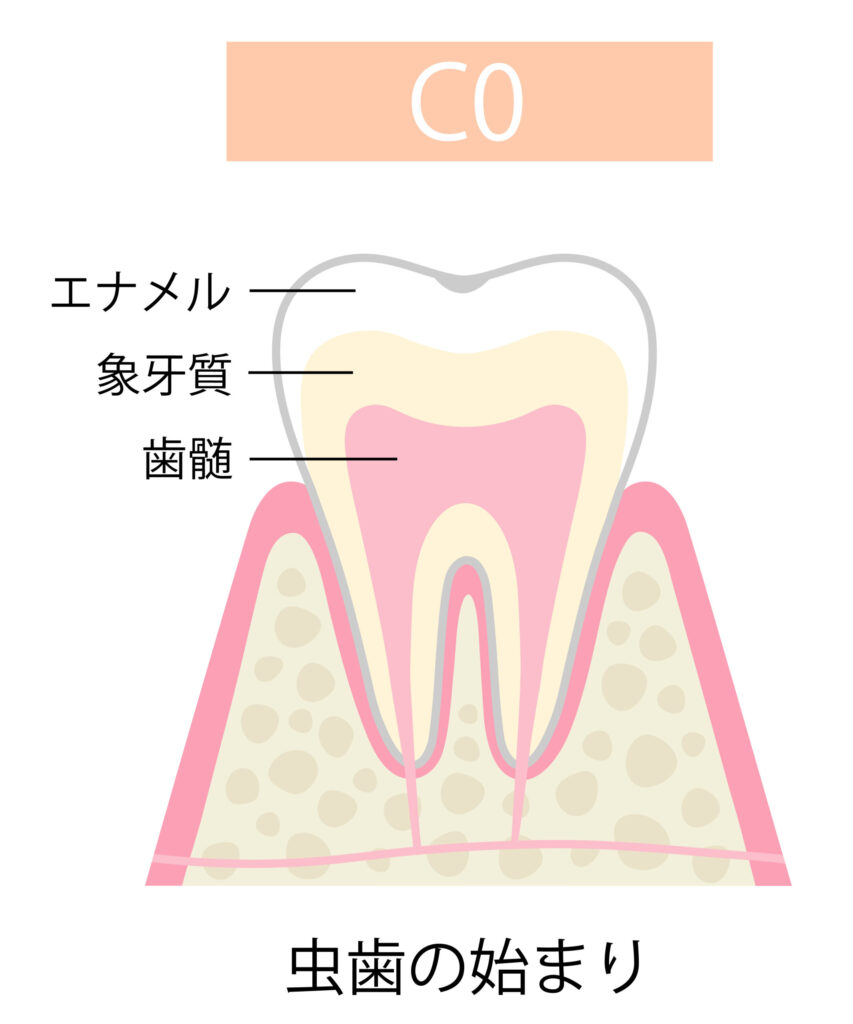
Condition
The enamel surface looks cloudy white, or is discolored only. No cavity has formed yet.
Main treatment
Fluoride application and watchful monitoring.
C1 (cavity in the enamel)
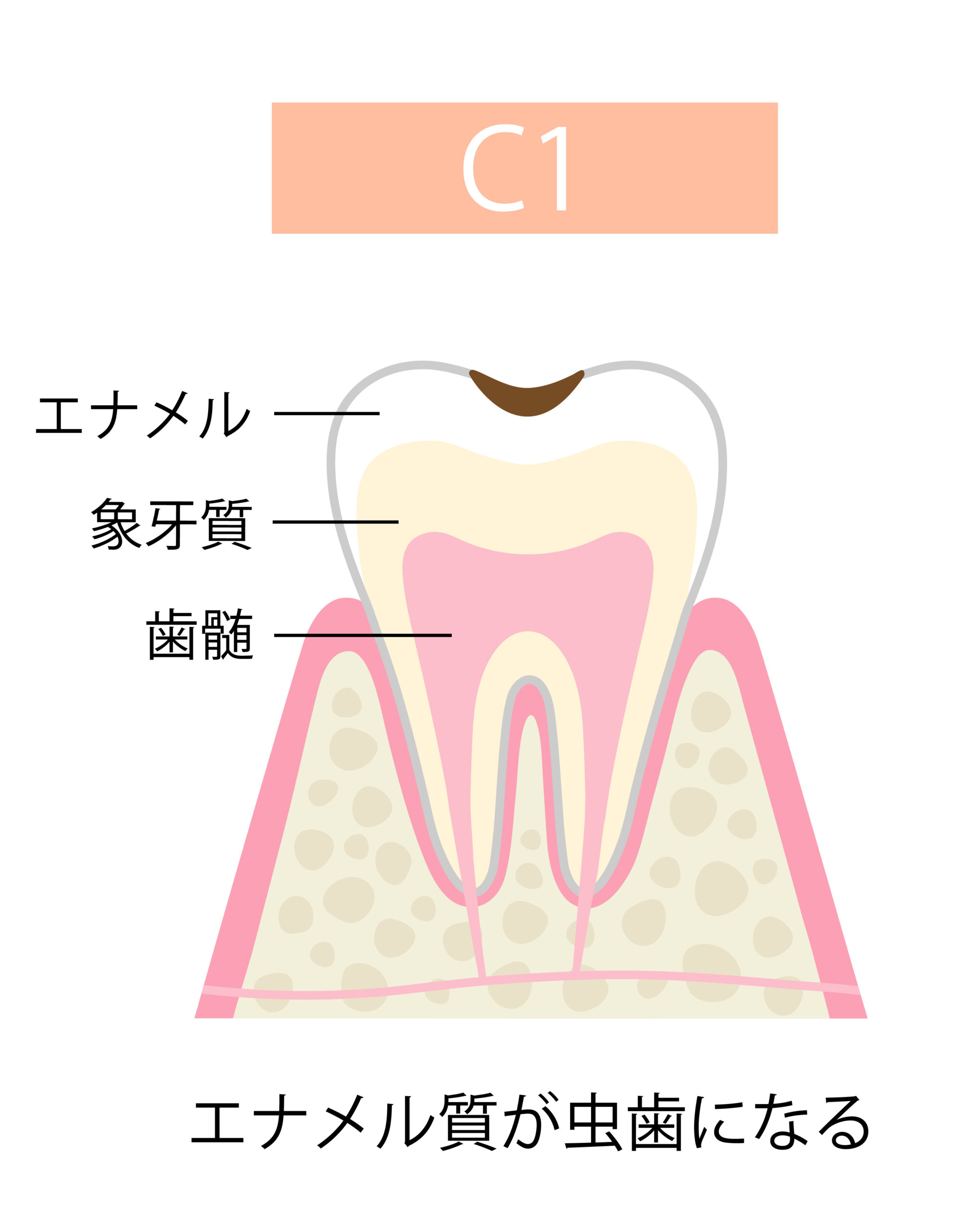
Condition
A small cavity has started to form in the enamel. There is almost no pain.
Main treatment
Watchful monitoring, through to minimal drilling and restoration.
C2 (cavity in the dentin)
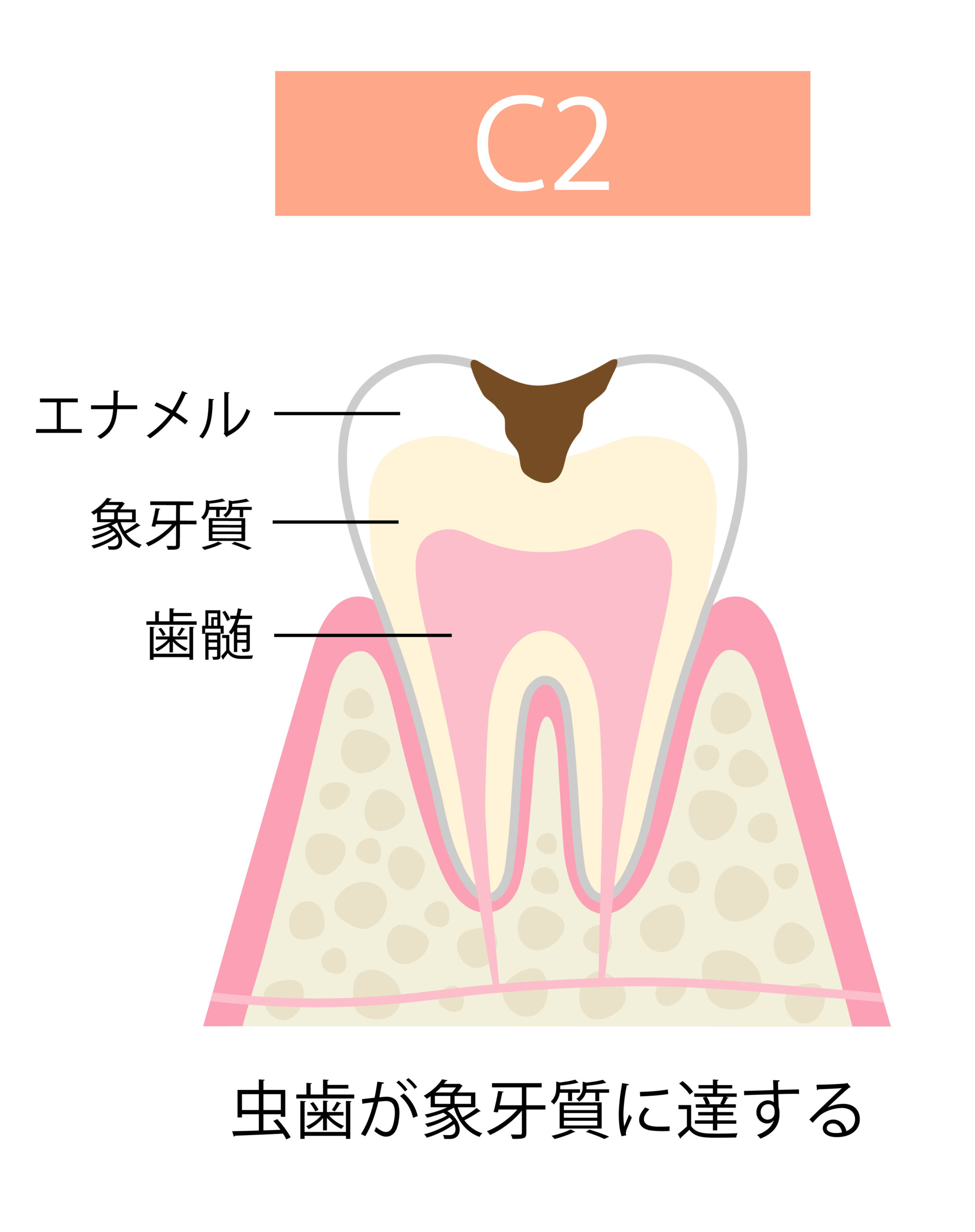
Condition
The cavity has reached the dentin. Cold foods and drinks may cause sensitivity.
Main treatment
Remove the decay and restore the tooth with a filling.
C3 (progressed to the nerve)
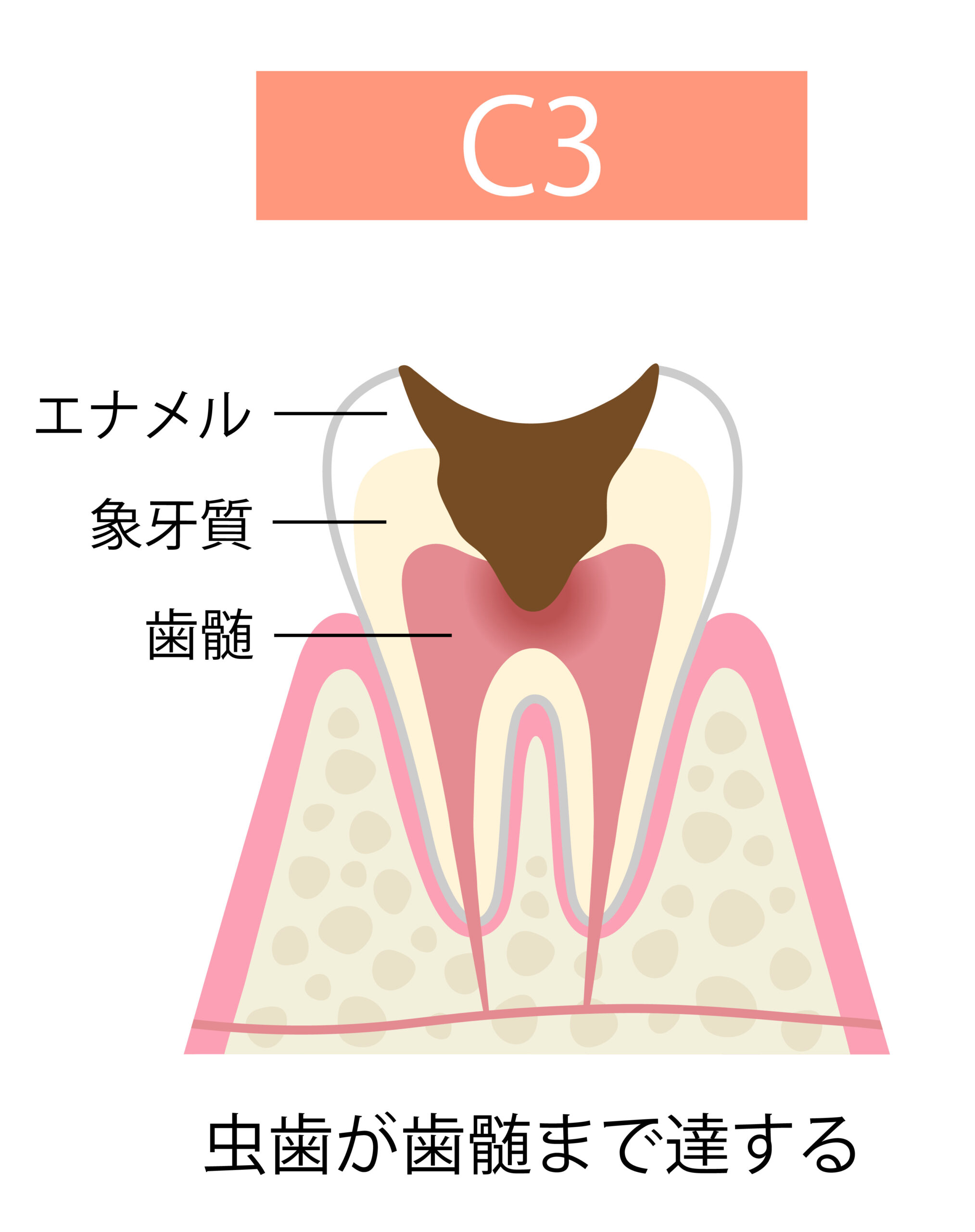
Condition
The decay has reached the pulp (nerve). This often causes severe pain.
Main treatment
Root canal treatment (treating the nerve), followed by a crown.
C4 (only the root remains)
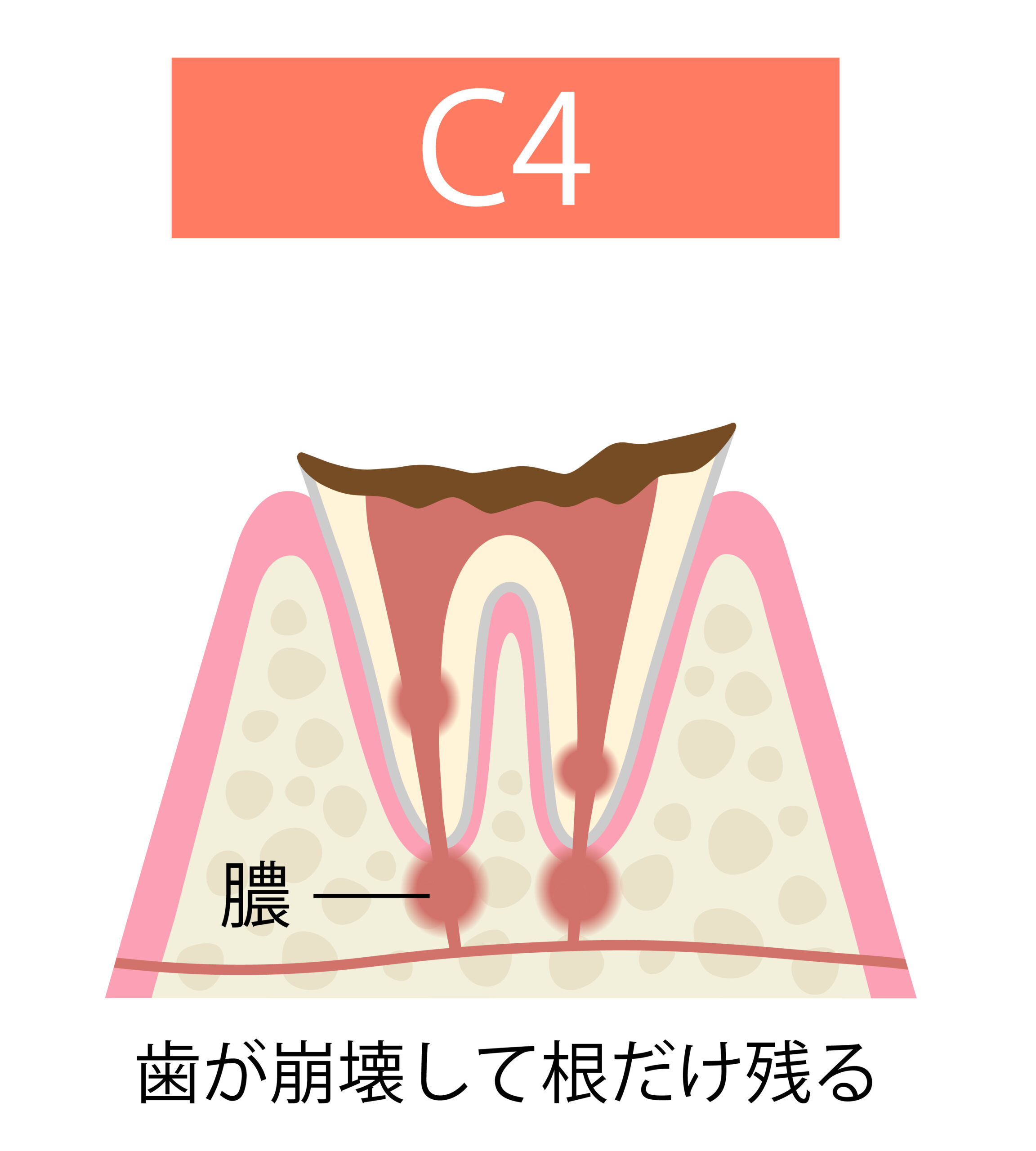
Condition
Most of the tooth has broken down, leaving only the root.
Main treatment
Extraction is considered, followed by prosthetic treatment.
From C2 (a cavity in the dentin) onward, treatment often can’t be completed in a single visit, and multiple visits become necessary. Finding and dealing with a cavity as early as possible, at or before C1 (a cavity in the enamel), is important for keeping the burden of treatment lighter.
Also, when a cavity has progressed close to the nerve, we may use MTA cement. It’s a highly biocompatible material that lets us treat the cavity while protecting the nerve, and we use it with the aim of preserving the nerve as much as possible.
Steps in cavity treatment

Initial visit, examination, and diagnosis
We check the condition of your whole mouth with x-rays and a visual exam. After identifying the location and stage of the cavity, we explain the treatment plan. Please feel free to ask about anything you’re unsure or concerned about at this stage.
Anesthetic
When pain is expected, we first apply a topical anesthetic, then administer local anesthetic with an electric injector. We only begin treatment once the anesthetic has taken effect, so you should not feel strong pain during the procedure.
Removing the decay and restoring the tooth
We remove the infected tooth structure and restore the tooth with composite resin (a white resin) or a filling. If a large amount needs to be drilled away, we take an impression and fit a ceramic or other filling or crown on a later visit.
Checking your bite and finishing touches
After restoring the tooth, we check the balance of your bite and make adjustments as needed.
Ongoing care and maintenance
Even after treatment is finished, we recommend a regular check-up once every 3 months. Cavities are a condition that easily recurs, and checking the condition of your mouth regularly helps protect the long-term health of your teeth.
What to watch for after treatment

Right after a filling or crown is fitted, we recommend holding off on eating until the anesthetic wears off. Eating while your mouth is still numb can lead to accidentally biting your cheek or tongue.
Also, after a filling, repeatedly eating hard or very sticky foods (such as caramel or chewing gum) can cause the filling to come loose. We ask that you avoid putting strain on the treated area for a while.
If you have ongoing discomfort or pain after treatment, the nerve may have been irritated. This usually settles down over time, but please don’t hesitate to contact us if the symptoms are severe or last a long time.
About cost
Our basic approach is treatment within the scope of insured care, so in addition to the initial and follow-up consultation fees, there is a treatment cost that depends on how far the cavity has progressed. Insured treatment covers silver (metal) fillings and crowns, but if you value appearance or durability, we can also suggest private-treatment materials such as ceramic.
| Treatment | Approximate cost |
|---|---|
| Cavity filling (insured) | Covered by insurance (30% co-payment) |
| MTA cement (nerve protection) | ¥22,000 (tax included) |
| CAVIOS (nerve-protection material) | ¥3,300 (tax included) |
Frequently asked questions

Does cavity treatment hurt?
Before treatment, we apply a topical anesthetic and then administer anesthetic slowly with an electric injector, so you should not feel strong pain during treatment. That said, you may feel temporary pain or discomfort after the anesthetic wears off. Please contact us if the pain is severe or lasts a long time.
Can treatment be finished in a single visit?
That depends on the extent and depth of the cavity. A small cavity can sometimes be treated in a single visit, but if an impression or root canal treatment is needed, multiple visits are required. At your first visit, we’ll explain the treatment process and roughly how many visits to expect, so please talk to us about what fits your schedule.
My fillings keep coming out after treatment. Why does this happen?
There are several possible reasons a filling comes loose. The main ones are strain on an area where your bite is strong, deterioration of the material, and a new cavity forming underneath the filling. We take care in adjusting your bite, but please feel free to talk to us if this is a concern.
Can you treat cavities in children too?
Yes, we treat children too. We also have a kids’ area, and do our best to create an environment where children can feel a little more relaxed about coming in. Even for a child visiting the dentist for the first time, we take things step by step without pushing too hard, so there’s no need to worry.
Can I replace a silver filling with ceramic?
Yes, it’s possible. After removing the old silver filling and checking the condition underneath, we can suggest switching to a ceramic material such as e.max or zirconia. This isn’t just about appearance — it’s also a good option if you’re concerned about metal allergies. We’ll explain the cost and steps in detail after the examination.