

Preventive dentistry and cleaning
Rather than “going to the dentist once it hurts,” we place real value on “continuing to visit in order to protect your teeth” — that is our idea of prevention.
- You would like to come in regularly, but are not sure what we do
- You are bothered by staining or bad breath, but are not sure who to ask
Please come and talk to us first.
Preventing cavities and periodontal disease before they start puts less strain on your teeth and costs less than treating them after symptoms appear. 高田馬場歯科・矯正歯科 recommends a regular check-up every three months, and offers preventive care suited to each patient’s oral condition, including PMTC, Airflow, fluoride application, and brushing instruction. In the Takadanobaba area, we have built a place where patients can keep coming back for the long term, feeling at ease. It’s not just somewhere for treatment, but “a place you visit to protect your teeth.”
Features of our preventive dentistry
Airflow removes even the grime you cannot reach
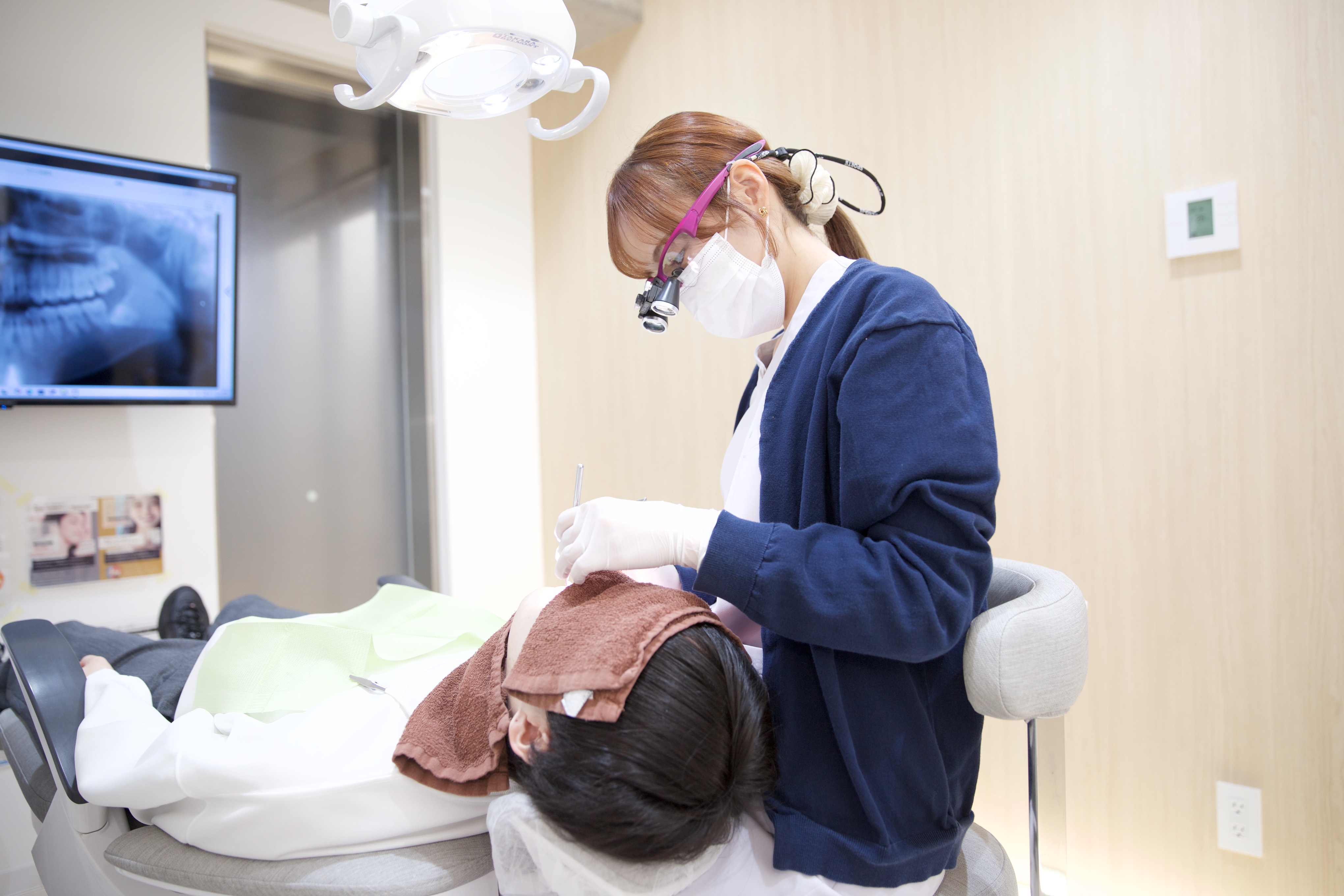
Biofilm — clusters of bacteria — builds up on the surface of your teeth and at the entrance to periodontal pockets, and it is hard to remove with an ordinary scaler (the instrument used to remove tartar). We use Airflow, which jets a fine powder to efficiently clear away biofilm without damaging your teeth or gums.
It is also highly effective on staining from tea, coffee, and tobacco tar. Unlike cleaning that “just removes tartar,” this method focuses on improving the bacterial environment inside your mouth itself.
Brushing instruction suited to each patient’s mouth
Where you tend to miss spots when brushing depends on your brushing habits and the alignment of your teeth. We use a disclosing solution so you can see exactly where you have missed, then show you a brushing method suited to you.
If you brush with care but grime still seems to turn up somehow, the cause is often pressing too hard or holding the brush at the wrong angle. A small adjustment can cut down on missed spots by a lot. Improving the quality of your daily home care helps the benefits of your regular check-ups last longer.
Coming in regularly is the best way to protect your teeth long term
Even after treatment is finished, we take the time to explain the importance of prevention, so patients keep coming back. We believe that shifting your mindset from “come in once it hurts” to “come in for maintenance every three months” is the first step toward protecting your teeth over the long term.
Recording and comparing the state of your mouth at every check-up lets us catch problems while they are still small. The earlier we can address something, the lighter the treatment burden, so we recommend regular visits especially when you have no symptoms.
Why preventive dentistry matters

Quite a few people do not go to the dentist unless something hurts.
Research has shown a clear difference in the number of teeth people have left in old age, depending on whether they had regular professional cleanings. People who keep more of their own teeth tend to chew better, and are also said to have a lower risk of conditions such as dementia and aspiration pneumonia.
Both cavities and periodontal disease are painless and easy to miss in their early stages. By the time it hurts enough to make you go in, the disease has often already progressed, which increases the number of visits, the cost, and the physical burden of treatment. Regular checks by a professional lead to early detection and an early response.
Preventive treatments available at our clinic
PMTC (Professional Mechanical Tooth Cleaning)
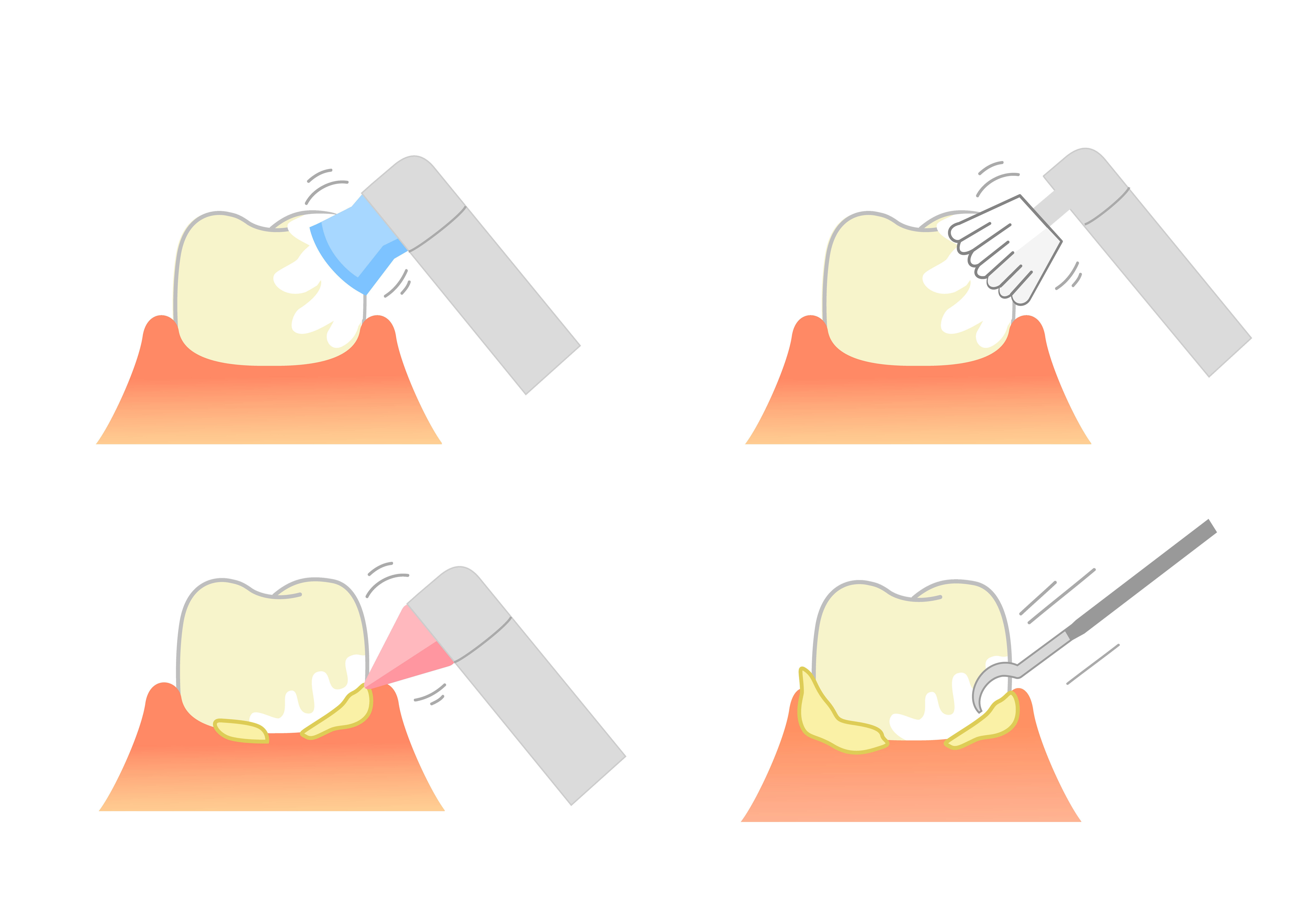
PMTC stands for Professional Mechanical Tooth Cleaning, a treatment that cleans every surface of your teeth using specialized instruments and polishing paste. It takes the time to polish areas a toothbrush cannot reach, such as between the teeth and along the gumline, making it highly effective at removing biofilm and smoothing the tooth surface.
Once the tooth surface is smooth, plaque has a harder time sticking, which can also help slow the build-up of new grime.
Airflow (ultra-fine powder cleaning)
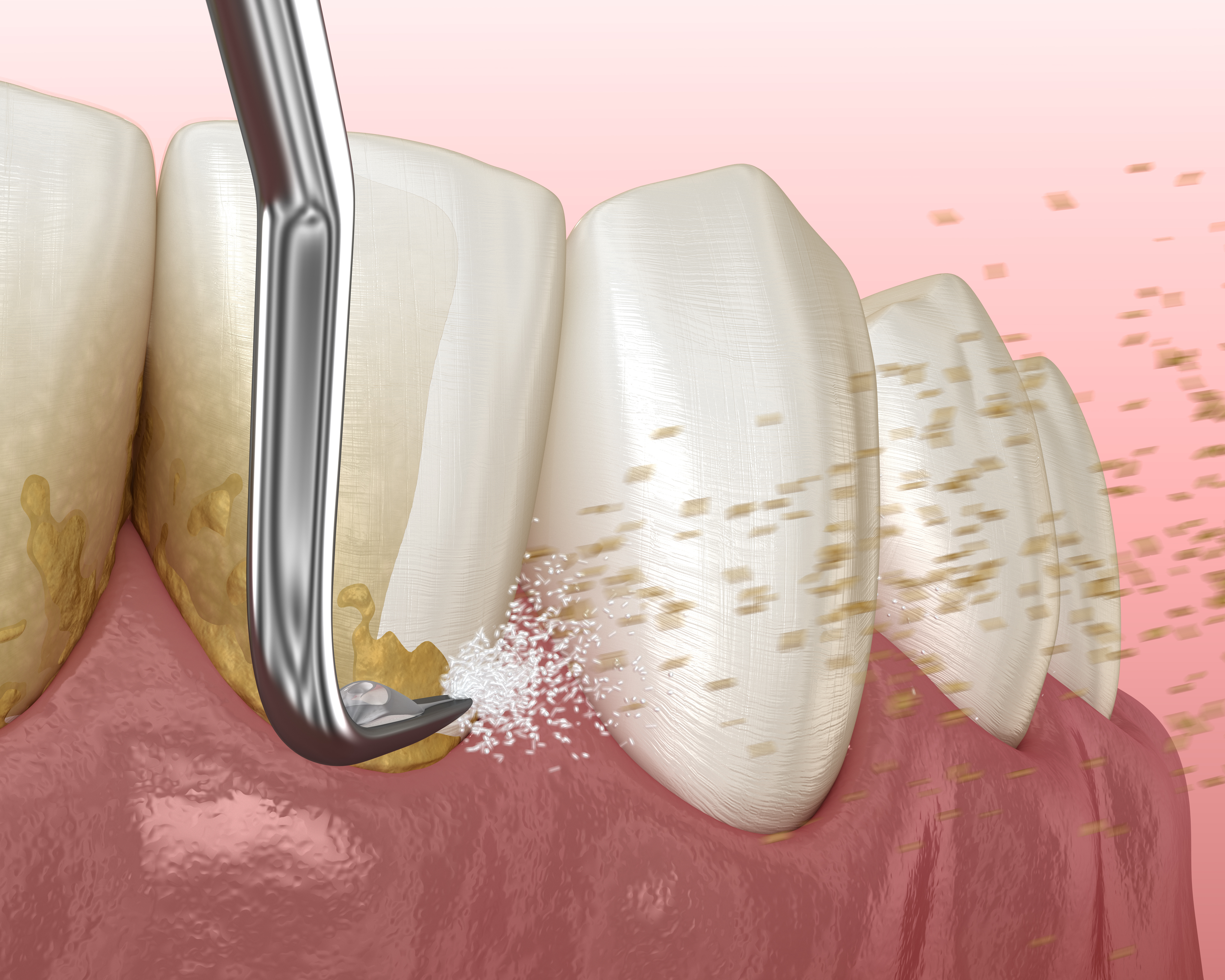
An ultra-fine powder is jetted onto your teeth to remove biofilm and staining from small areas a scaler cannot reach. It is gentle on your teeth and gums, and can clean a wide area in a short time.
It is also well suited to anyone bothered by staining from coffee, tea, red wine, or tobacco, leaving the tooth surface looking brighter and cleaner afterward. Many patients also combine it with whitening.
Fluoride application
Fluoride promotes remineralization of the teeth and increases their resistance to acid. Applying fluoride after cleaning further boosts its cavity-prevention effect. It is an effective treatment not just for children, but for adults too.
Brushing instruction
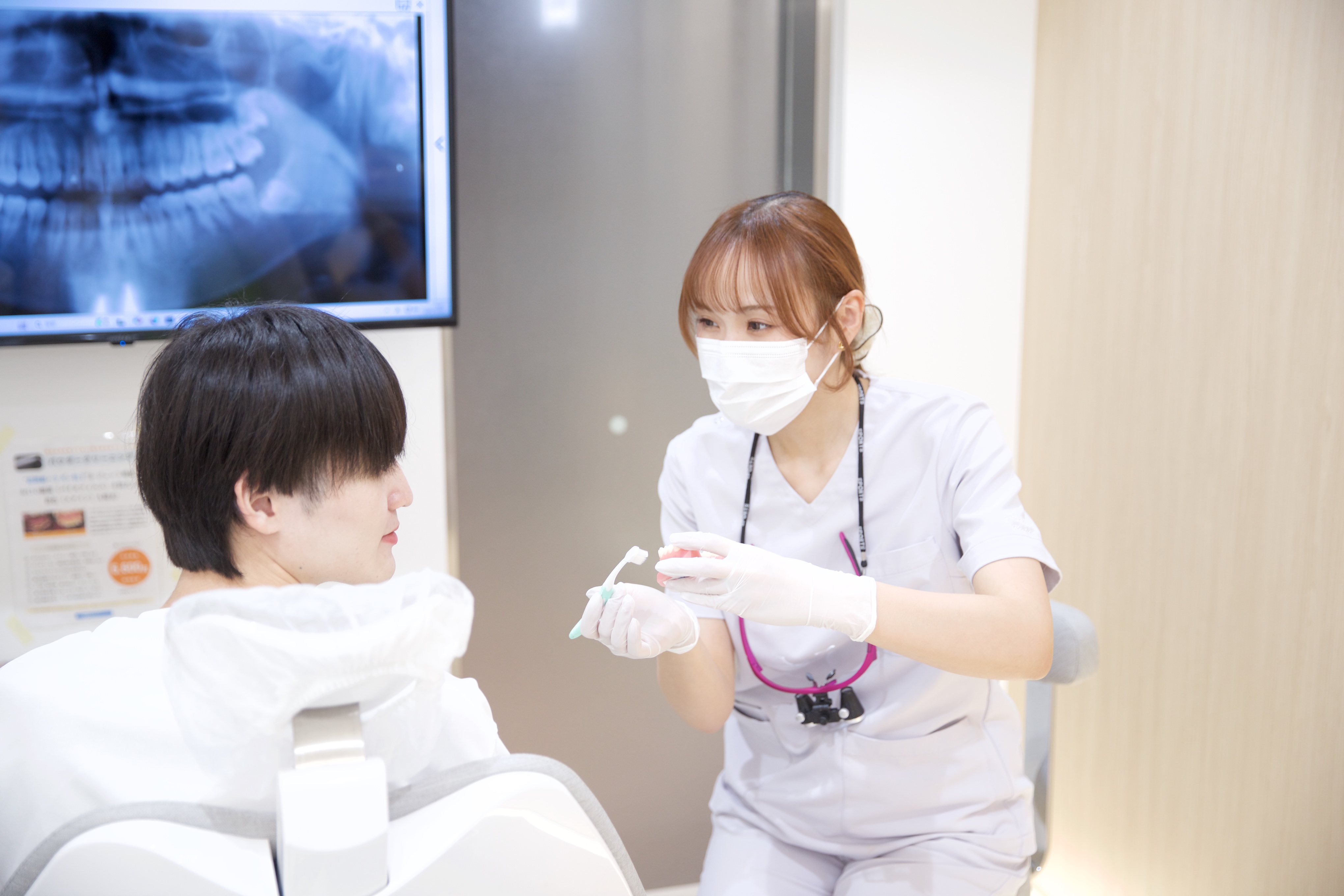
We explain how to position and move your toothbrush effectively, and how to use dental floss and interdental brushes, based on each patient’s tooth alignment, gum condition, and brushing habits. Making correct home care a habit is the single biggest key to making the effects of cleaning last.
What to expect at a regular check-up
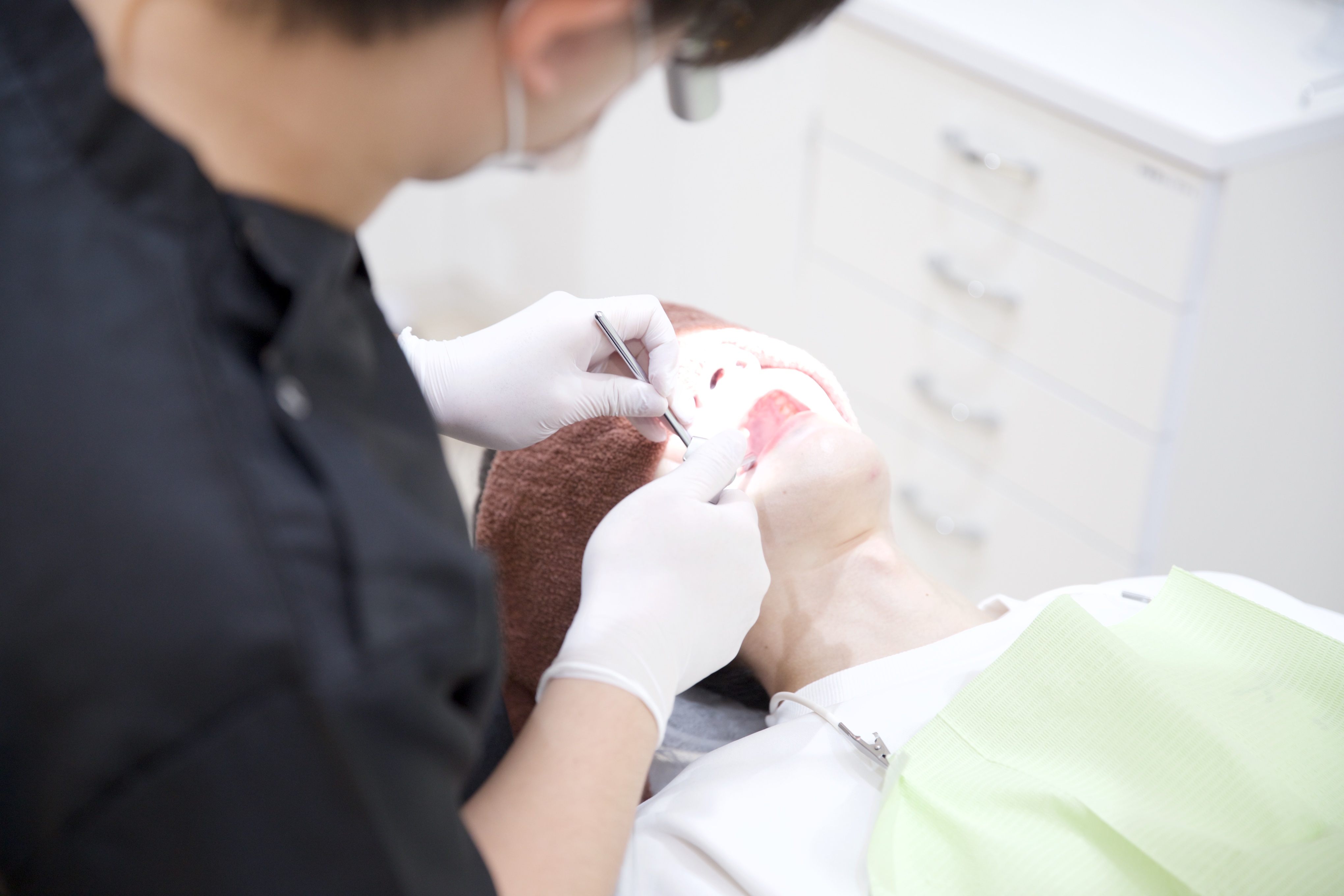
We recommend a regular check-up every three months. Each visit takes around 30–60 minutes as a guide.
Oral examination
We check the condition of your teeth and gums, the depth of your periodontal pockets, and more, recording and comparing the results regularly to catch any early signs of cavities or periodontal disease.
Tartar removal (scaling)
We use specialized instruments to remove tartar that has built up on the tooth surface and along the gumline. Tartar is one of the main causes of periodontal disease, and it cannot be removed through self-care alone.
PMTC and Airflow
After tartar removal, we carry out professional tooth-surface cleaning with PMTC or Airflow, removing biofilm and cleaning away stains at the same time.
Fluoride application
We apply fluoride after cleaning to promote remineralization of your teeth. This is especially effective if you have an early-stage cavity.
Brushing instruction and consultation
Please feel free to ask us anything you are concerned about. We will also review your brushing and let you know roughly when to come back next.
The difference between insured and private cleaning
Even though it is all called “cleaning,” insured and private treatment differ greatly in purpose, content, and effect.
| Item | Insurance-covered cleaning (tartar removal) | Cleaning with PMTC or Airflow (private) |
|---|---|---|
| Purpose | Part of “treating” periodontal disease and cavities | Focused on maintaining your oral environment and “prevention” |
| Main content | Tartar removal with a scaler | Biofilm removal with PMTC or Airflow |
| Stain removal | Not included | Included (tea stains, tobacco tar, etc.) |
| Cost | 30% co-payment (within insurance) | Private (flat fee) |
| Frequency | Depends on the state of your periodontal disease | Once every 3–4 months (as a guide) |
Insured cleaning is carried out for the purpose of “treating symptomatic periodontal disease.” Private PMTC or Airflow, by contrast, is preventive care focused specifically on “keeping a healthy mouth healthy.” The two serve different purposes, and private cleaning is the better fit for a healthy patient who wants to come in regularly for prevention.
About self-care at home

Regular check-ups alone cannot maintain the health of your mouth. Combining daily self-care with regular professional cleaning is the basis of long-term prevention.
Brush your teeth 2–3 times a day, and brushing before bed is especially important. Saliva flow decreases while you sleep, creating an environment where bacteria multiply more easily. A toothbrush alone cannot fully clear grime from between your teeth, so we strongly recommend also using dental floss or an interdental brush.
It is very common to feel like you are “brushing properly” when spots are actually being missed. Brushing instruction using a disclosing solution can reveal missed-spot habits you were not aware of. We encourage you to take the opportunity to review your own brushing at least once.
About the cost
| Treatment | Estimated cost |
|---|---|
| Tartar removal / scaling (insured) | Covered by insurance (30% co-payment) |
| PMTC (professional tooth-surface cleaning, full mouth) | ¥13,200 (tax included) |
| Airflow (stain removal, 6 sections) | ¥14,300 (tax included) |
| Fluoride application | Covered by insurance (30% co-payment), or included with treatment |
| Brushing instruction | Covered by insurance (30% co-payment), or included with treatment |
*We will explain the difference between insured and private treatment, and which option suits you, at your appointment. First-time patients are welcome too — please feel free to ask.
Frequently asked questions

How often should I get a cleaning?
We recommend once every three months as a guide. The right frequency varies with your oral environment and periodontal disease risk, but tartar tends to build up once you go past three months, raising your risk of cavities and periodontal disease. Even if you feel “it is probably not that dirty yet,” a professional eye will almost always find grime that has built up.
Can I get a cleaning through insurance?
Scaling (tartar removal) is covered by insurance. However, PMTC or Airflow for prevention is private treatment. We will suggest a combination of insured and private treatment based on the condition of your mouth, so please talk to us first.
Will my teeth get whiter?
Cleaning with Airflow can remove external staining from tea, coffee, and tobacco tar. However, yellowing inside the tooth itself (from aging, genetics, medication, and so on) cannot be improved by cleaning alone. In that case, we recommend whitening.
Can children have this too?
Yes, we also offer preventive care for children. Fluoride application and brushing instruction are especially important while baby teeth are being replaced by permanent teeth. Regular check-ups are also a good way to help your child get used to visiting the dentist.
Can I get a cleaning while pregnant?
Yes, you can get a cleaning while pregnant. Hormonal changes during pregnancy make the gums more prone to inflammation, and this is a time when so-called “pregnancy gingivitis” is common. We actually recommend being proactive about managing your oral health during this period.