


Root canal treatment
Working from the premise of “keeping your tooth rather than extracting it,” we place real value on extending the life of your teeth through careful root canal treatment.
- You have been told by another dentist that “extraction is the only option”
- Your root canal treatment has dragged on and just will not seem to end
Please come and talk to us first.
Root canal treatment (treatment of the tooth root) is carried out when the nerve (pulp) becomes inflamed or infected due to a cavity, injury to the tooth, or similar. It aims to clean the root canal inside the tooth, remove bacteria, and then seal it with medication to keep bacteria out as far as possible, preserving the tooth wherever we can. 高田馬場歯科・矯正歯科 provides root canal treatment that keeps the risk of recurrence as low as possible, using nickel-titanium files and careful treatment suited to each patient’s condition.
Table of Contents
Features of our root canal treatment
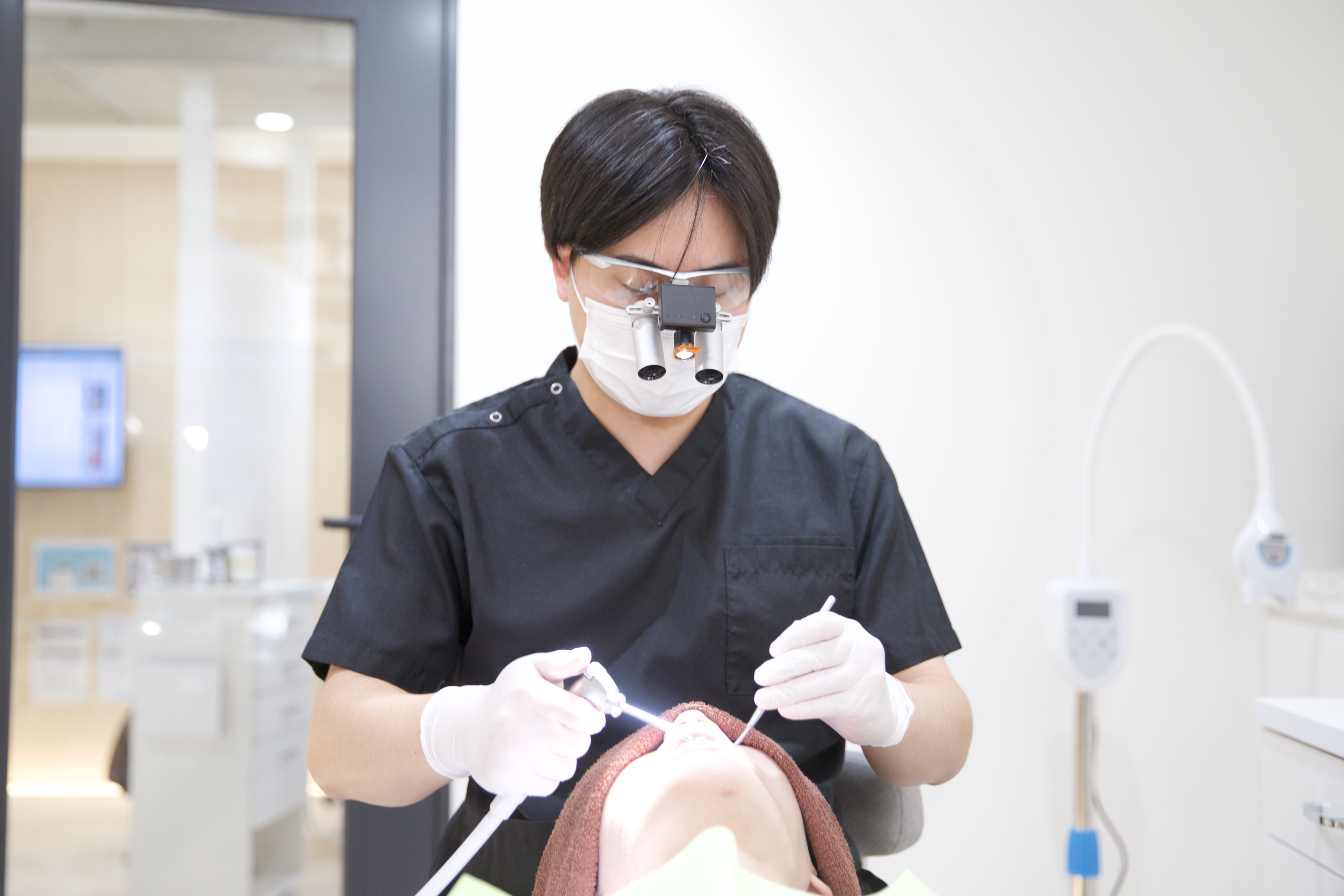
Careful, precise canal shaping with nickel-titanium files
The root canal — the thin channel inside the root of a tooth — is often complex and curved, and it can be difficult to clean the curved sections comfortably with a conventional stainless-steel file (a thin, needle-like instrument). We use highly flexible nickel-titanium files so that cleaning can follow the actual shape of the canal.
This reduces the risk of over-shaving the canal wall or causing a perforation, which can happen when a file is forced into a curved canal, letting us treat the tooth while preserving the canal’s original shape as much as possible.
Anesthesia that is mindful of pain
Many people picture root canal treatment as “painful.” In fact, once proper anesthesia has taken effect, you will rarely feel strong pain during treatment. We first apply a topical anesthetic, then administer anesthesia with an electric syringe, keeping any discomfort you feel to a minimum.
When inflammation is severe, anesthesia can be less effective. In that case, we take a careful, step-by-step approach suited to your condition — for example, calming the inflammation first before moving ahead with treatment.
Our commitment to preserving the nerve
“Removing the nerve” gets rid of the pain in your tooth, but it also cuts off the tooth’s supply of nutrients. Even when a cavity has reached close to the nerve, we aim to protect it using highly biocompatible materials such as MTA cement, treating the tooth in a way that keeps the pulp alive wherever possible.
If the nerve is already infected or has died, root canal treatment is necessary — but we believe that aiming to preserve it before it reaches that stage helps protect the long-term health of the tooth.
Cases where root canal treatment is needed

The main cases where root canal treatment becomes necessary are as follows.
When a cavity has progressed to the nerve
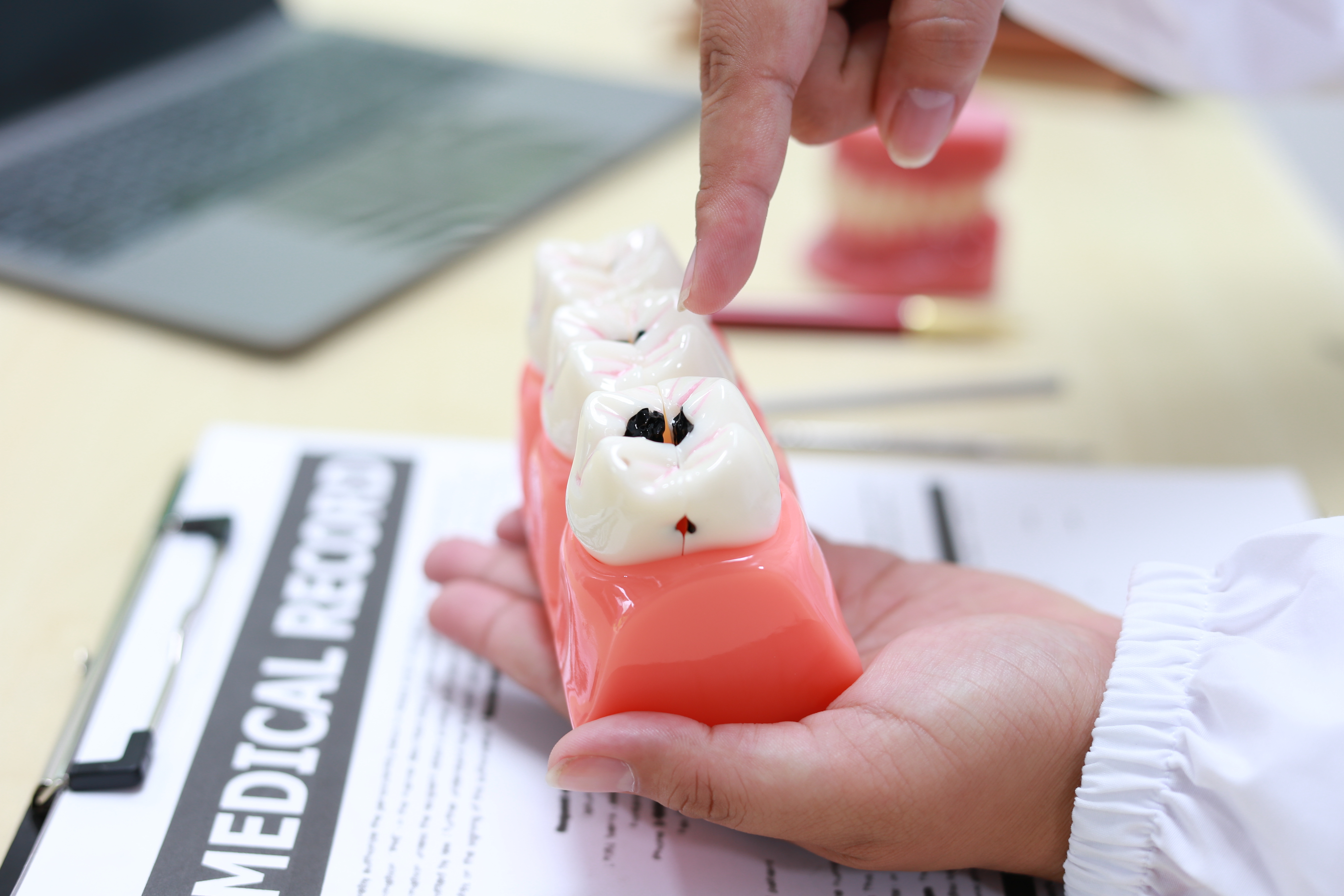
Once a cavity has progressed to C3 or beyond and reached the pulp (nerve), the pulp becomes infected with bacteria and inflamed. This can cause intense pain, and if the infected pulp is not removed, the inflammation spreads to the tip of the root (the apex). If pus builds up at the apex, causing “apical periodontitis,” the gums can swell and biting down can be very painful.
Reinfection of a previously treated tooth (root canal retreatment)
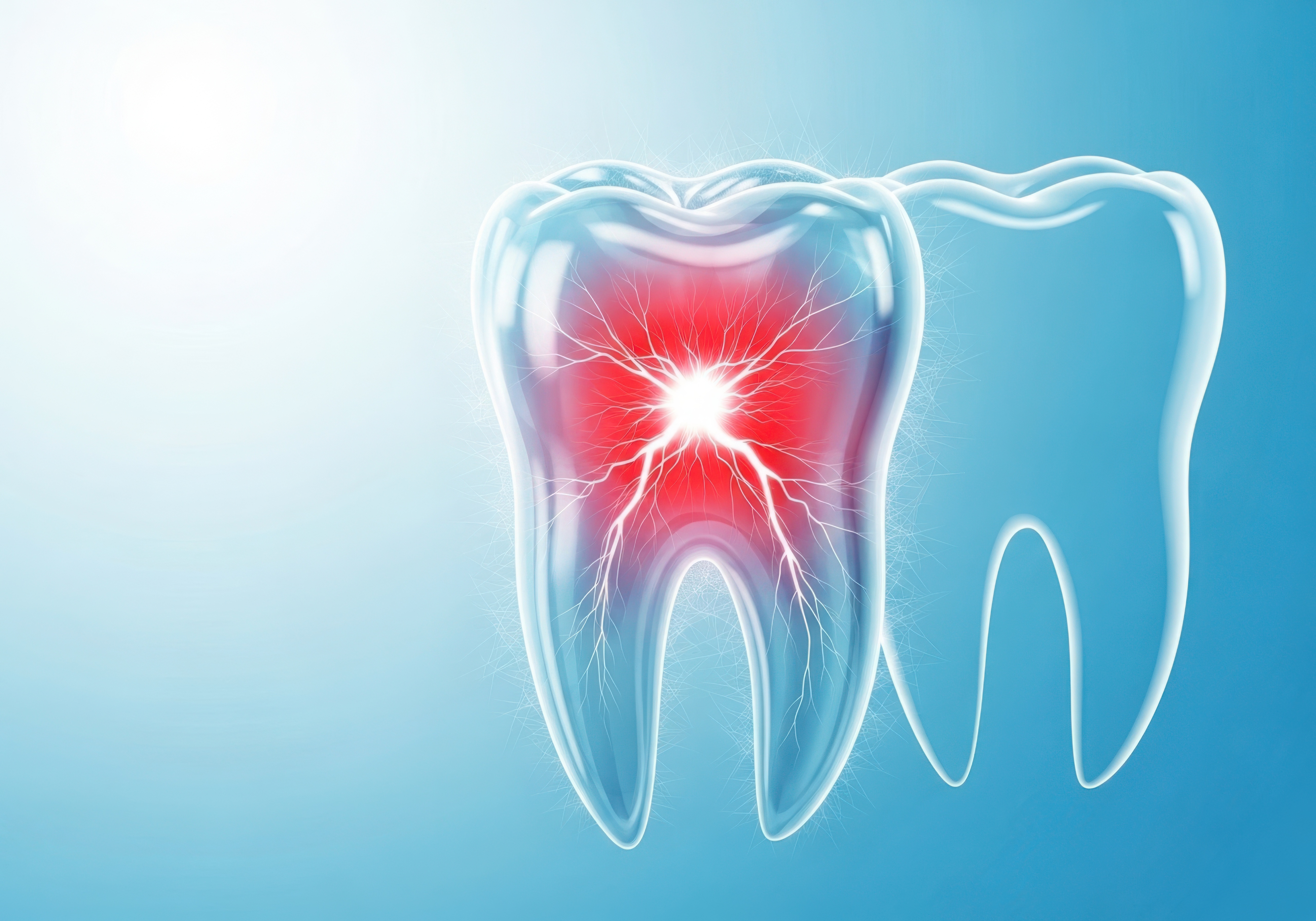
Even a tooth that has already had root canal treatment can have bacteria enter the canal again as time passes. This is often caused by gaps in old filling material or a poorly fitting crown, and if a lesion develops again at the apex, root canal retreatment is necessary.
Nerve exposure or infection from an injury
We also treat cases where the nerve has been exposed, or a broken tooth has become infected, due to a fall, collision, or other impact to the tooth. Symptoms do not always appear right away after an injury, so please come in as soon as possible if you have hit a tooth.
Apical lesions with no symptoms
In some cases, a lesion forms at the tip of the root (an apical lesion) without any symptoms at all. These are often discovered by chance on an X-ray at a regular check-up, which is why regular visits lead to early detection.
What to expect during root canal treatment

First visit and diagnosis
We check the condition of the tooth with an X-ray (and a CT scan if needed) and determine whether root canal treatment is necessary. After assessing the number and shape of the canals and the extent of the infection, we explain the treatment plan.
Anesthesia and access opening
We administer anesthesia using a topical anesthetic and an electric syringe, then open the top of the tooth to access the root canal. Anesthesia is needed if the nerve is still alive (a vital pulp), but if it has already died you may not feel any pain.
Canal cleaning and shaping (pulpectomy / infected root canal treatment)
We take the time to remove the infected pulp and bacteria using files and a solution such as sodium hypochlorite. Using nickel-titanium files lets us follow the complex shape of the canal. Because canals are extremely thin and complex, this step is often carried out over several visits.
Placing medication (disinfecting the canal)
After cleaning, we place a germicidal medication (such as calcium hydroxide) in the canal and seal it temporarily, keeping the canal disinfected until your next visit.
Root canal filling
Once we have confirmed the canal is clean, we seal it tightly using a rubber-like filling material called gutta-percha along with a root canal sealer.
Private-treatment materials are also available.
Building the core and placing the crown
After the root canal is filled, we build a core inside the tooth and fit a crown on top of it to restore the tooth’s function. For private treatment we use a fiber core, which places less strain on the root and does not show through, giving a better appearance too.
Estimated treatment time and number of visits

How long root canal treatment takes varies considerably with how far the infection has progressed and the shape of the canal.
| Condition | Approximate number of visits |
|---|---|
| Removing the nerve for the first time (pulpectomy) | 3–4 visits |
| Reinfection / root canal retreatment | Around 3–5 visits |
| When there is an apical lesion | Can be 4–6 visits or more |
Each visit takes around 30–60 minutes as a guide. We move forward while confirming that your symptoms are improving, so it is important not to rush and to keep coming in for treatment to succeed. Stopping partway through leaves the canal in an incomplete state and raises the risk of reinfection.
About restoring the tooth after root canal treatment
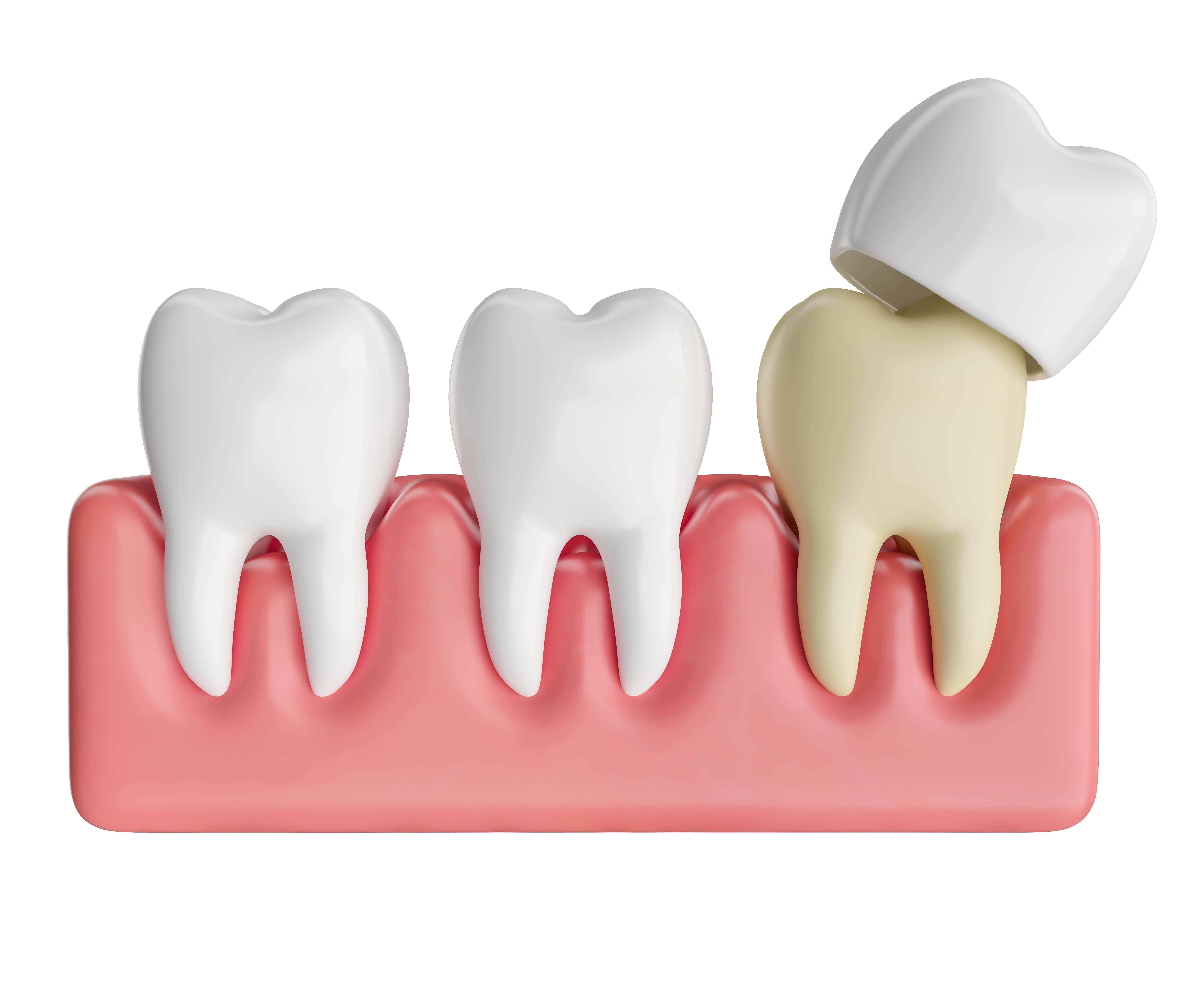
A tooth that has finished root canal treatment is hollow inside, which makes it very prone to cracking if left as is. A core and crown must always be fitted after treatment.
We offer a range of crown materials, from insured metal crowns to private e.max and zirconia options. We suggest the material that suits each patient after considering factors such as whether the tooth is a front tooth or a back tooth, your appearance preferences, and the condition of your bite.
Note that a poorly fitting crown or a cracked core after root canal treatment can cause reinfection. We recommend having the tooth checked regularly even after treatment.
About the cost
Root canal treatment is covered by insurance. The cost varies with the location and condition of the tooth, but back teeth (which have more canals) generally need more visits and cost more than front teeth.
| Treatment | Estimated cost |
|---|---|
| Root canal treatment (pulpectomy / infected root canal treatment) | Covered by insurance (30% co-payment) |
| Root canal sealer | ¥7,700 (tax included) |
| MTA cement (nerve protection) | ¥22,000 (tax included) |
| CAVIOS (nerve-protection material) | ¥3,300 (tax included) |
| Fiber core (post) | ¥22,000 (tax included) / 1 tooth |
| Zirconia-bonded crown (crown) | ¥168,300 (tax included) / 1 tooth *5-year warranty |
| Full zirconia crown (crown) | ¥146,300 (tax included) / 1 tooth |
| e-max crown (crown) | ¥113,300 (tax included) / 1 tooth |
| CT scan | ¥3,960 (tax included; free at your first visit or with implant treatment) |
*Full details of the cost of root canal treatment will be explained again after your examination. Please feel free to ask if anything is unclear.
Frequently asked questions

Why does root canal treatment take so much time (so many visits)?
Root canals are extremely thin and complex in shape, so it is difficult to completely remove infected tissue in a single visit. We need to repeat careful disinfection with medication over several visits. Trying to rush through and finish quickly can leave tissue behind and lead to reinfection.
Does removing the nerve weaken the tooth?
Yes — a tooth with the nerve removed loses its supply of nutrients, so it tends to become brittle. That is why, after root canal treatment, the whole tooth needs to be covered with a crown to make it more resistant to cracking. Keeping up with day-to-day maintenance and regular check-ups lets you keep using the tooth for a long time.
Is there any pain during treatment?
As long as proper anesthesia is working, you generally will not feel strong pain during treatment. However, when inflammation is severe, anesthesia can sometimes be insufficient. In that case, we prioritize calming the inflammation first, then move ahead with full treatment once things have settled. A dull ache or sense of discomfort may continue for a few days after treatment — this is a natural response to the procedure.
Can you still see a tooth I have been told has “no option but extraction”?
Yes — even if another clinic has told you that “extraction is the only option,” depending on the condition of the tooth there may still be a chance to save it with root canal treatment. We use CT imaging for more precise diagnosis. After closely checking the condition of your mouth, we will suggest the best course of treatment.