

Wisdom Tooth Extraction
We check the position of the nerves and blood vessels in advance with a dental CT scan, and we can extract a difficult wisdom tooth that’s impacted sideways or lies deep in the jaw.
- You have a painful wisdom tooth, or swelling that keeps coming back
- Another clinic has told you an extraction would be difficult
Talk to us any time.
A wisdom tooth (the third molar) sometimes erupts normally, but it’s not uncommon for one to come in impacted sideways or at an angle, or to put pressure on the tooth next to it. If you have symptoms such as pain that keeps coming back or swelling that won’t go down, it may be time to consider having it removed.
At 高田馬場歯科・矯正歯科 we carry out precise examinations with a dental CT scan, and we can handle a difficult wisdom tooth impacted sideways or lying deep in the jaw (a difficult extraction or an impacted tooth). If another clinic has told you it can’t be removed, please talk to us first.
What sets our wisdom tooth extraction apart
A system that can handle a difficult wisdom tooth
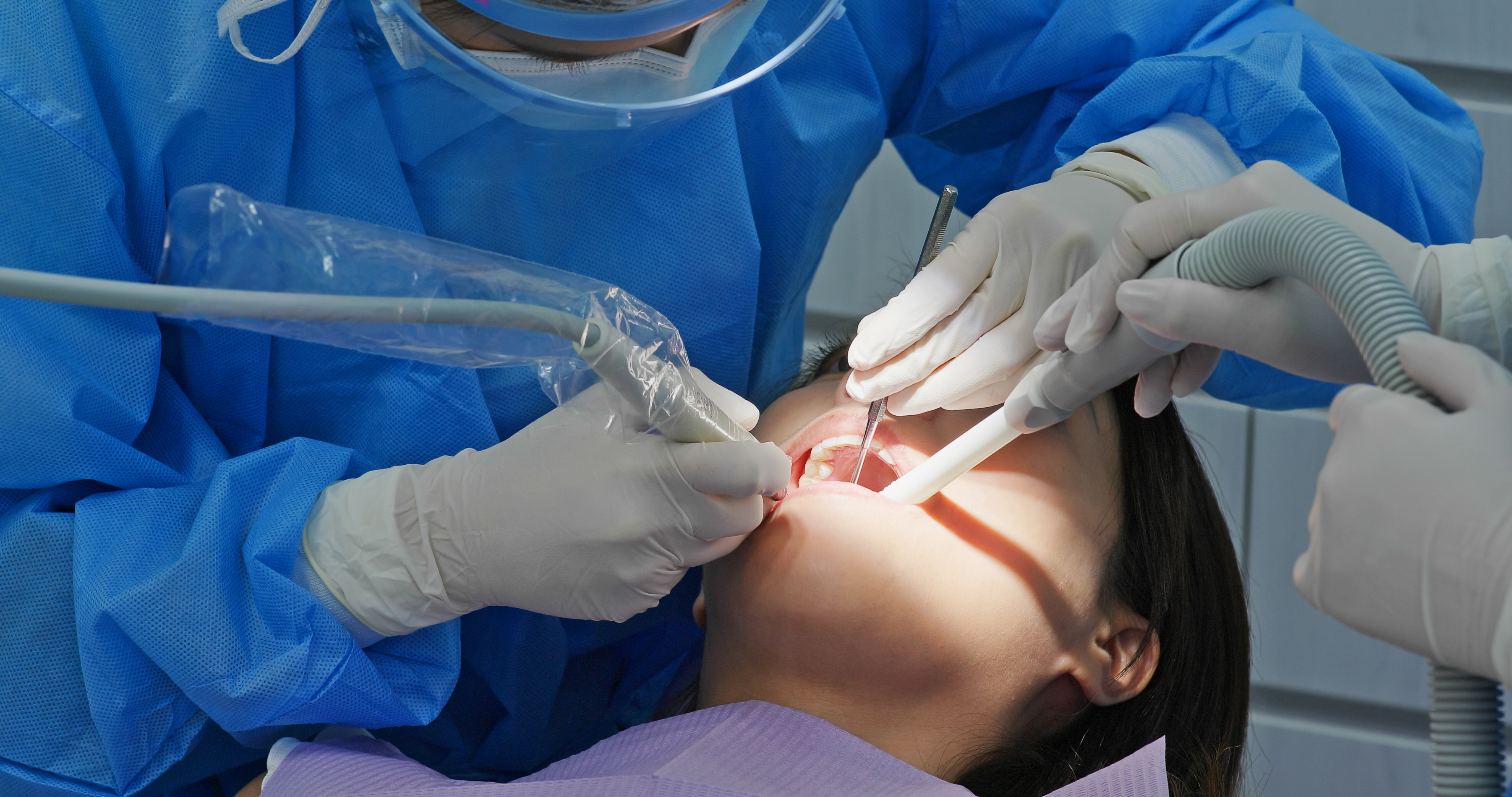
At a typical dental clinic, a wisdom tooth impacted sideways (a horizontally impacted wisdom tooth) or one lying deep in the jaw is sometimes referred to a university hospital or a specialized oral surgery clinic. We have a dentist on staff who trained in oral surgery at a general hospital, and we’ve built a system that can handle extracting even these difficult cases in house.
If another clinic has handed you a referral letter, or told you an extraction isn’t possible, please talk to us first. Depending on your condition, we may be able to treat you here.
Checking the nerve’s position in advance with a dental CT scan
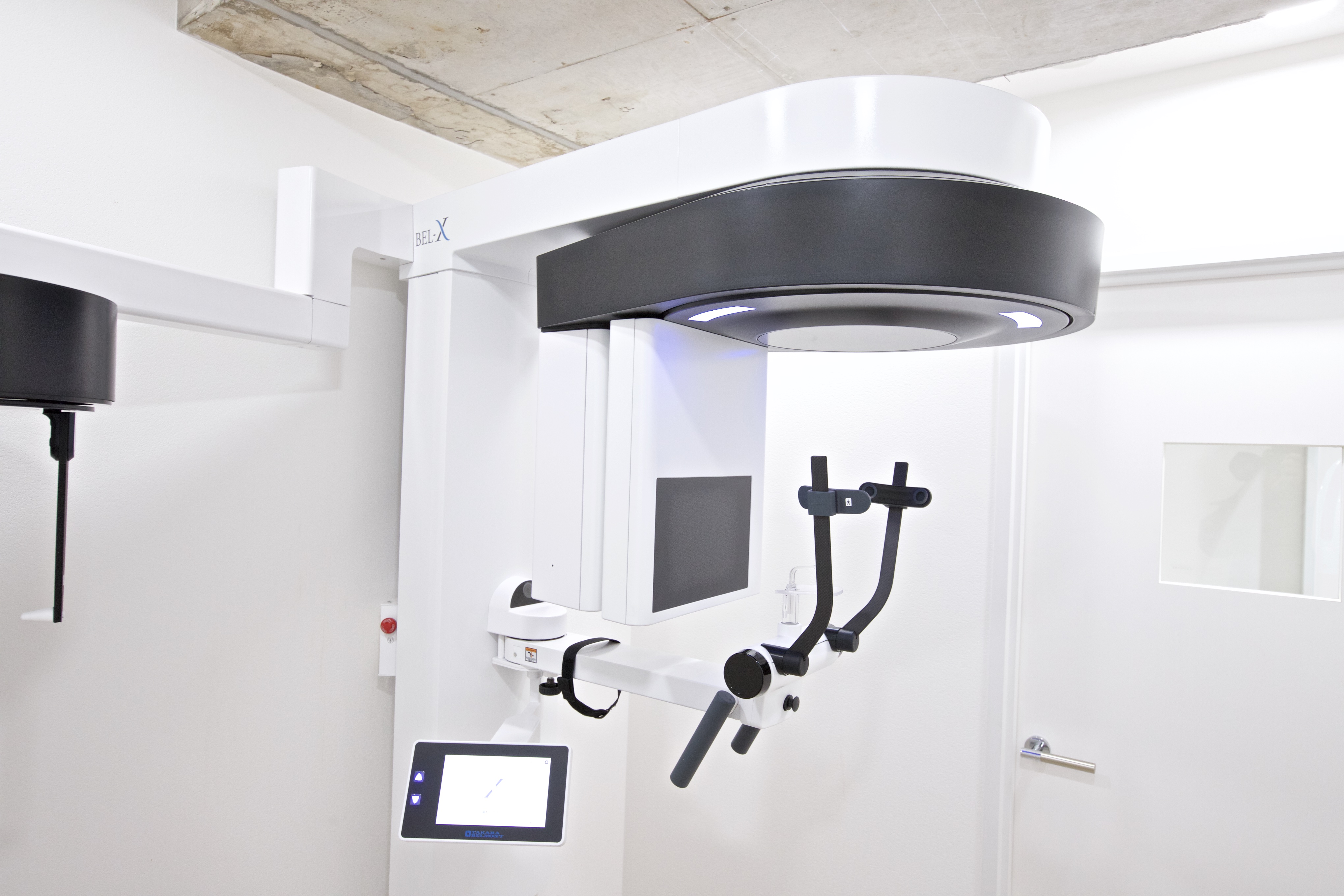
A thick nerve called the inferior alveolar nerve runs deep in the lower jaw. If this nerve lies close to the tip of a wisdom tooth’s root, there’s a risk of injuring it during extraction, so it’s important to know its position beforehand.
We use a dental CT scan, which lets us check the position of the nerves and blood vessels in three dimensions — detail a conventional two-dimensional X-ray can’t fully capture — before we carry out an extraction. A CT scan both improves the safety of the procedure and lets us explain the risks that can arise afterward to you beforehand.
A careful explanation before treatment
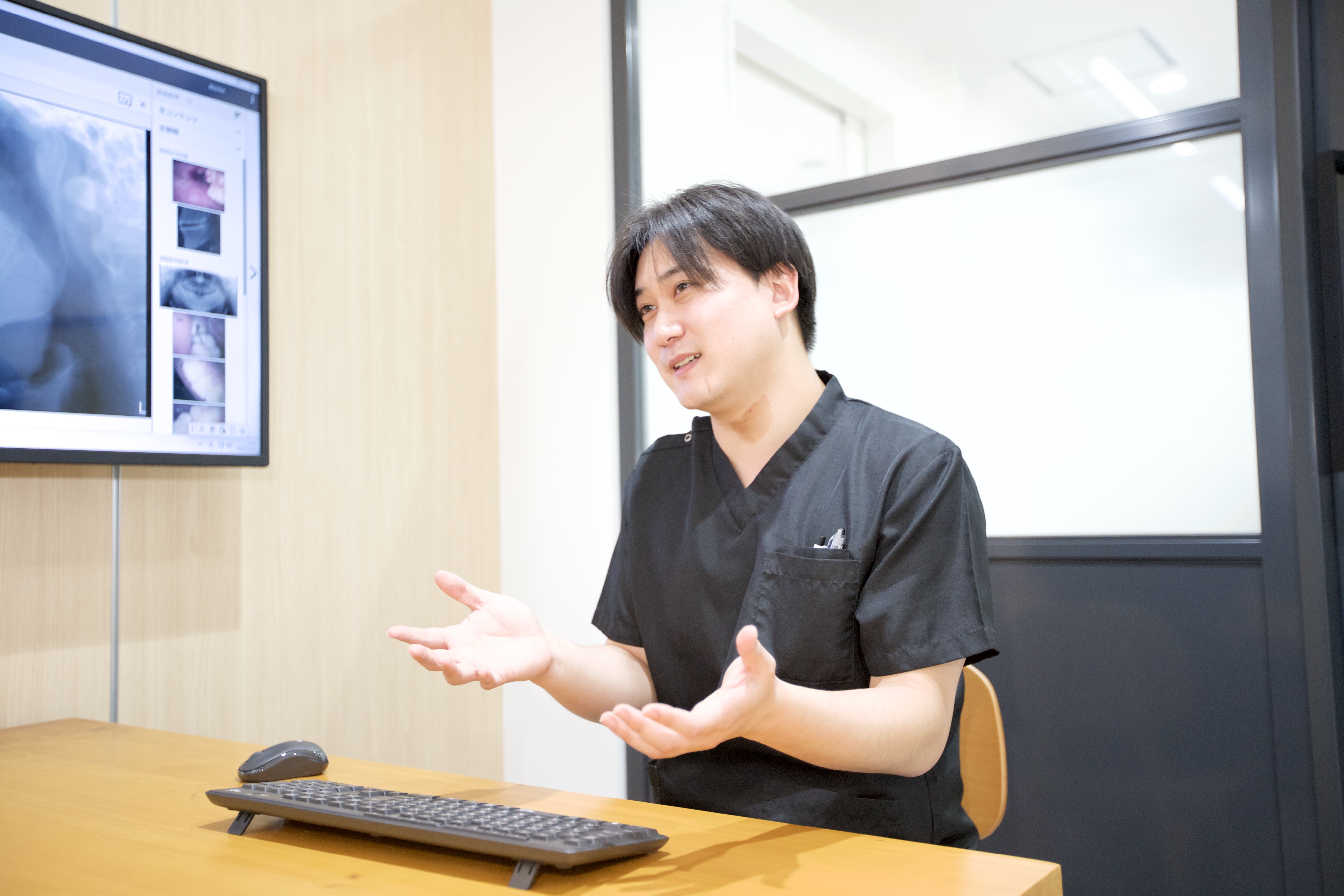
Having a wisdom tooth removed is one of the procedures many people find “scary” or expect to be “painful.” We explain everything clearly beforehand — from whether an extraction is needed, to what the procedure involves, its risks and what to watch for afterward — before we go ahead.
Being a short walk from Takadanobaba Station also makes it easy to come in for the multiple visits that follow-up care can require. If you have a symptom that concerns you, please come in and see us.
Cases where a wisdom tooth needs to come out
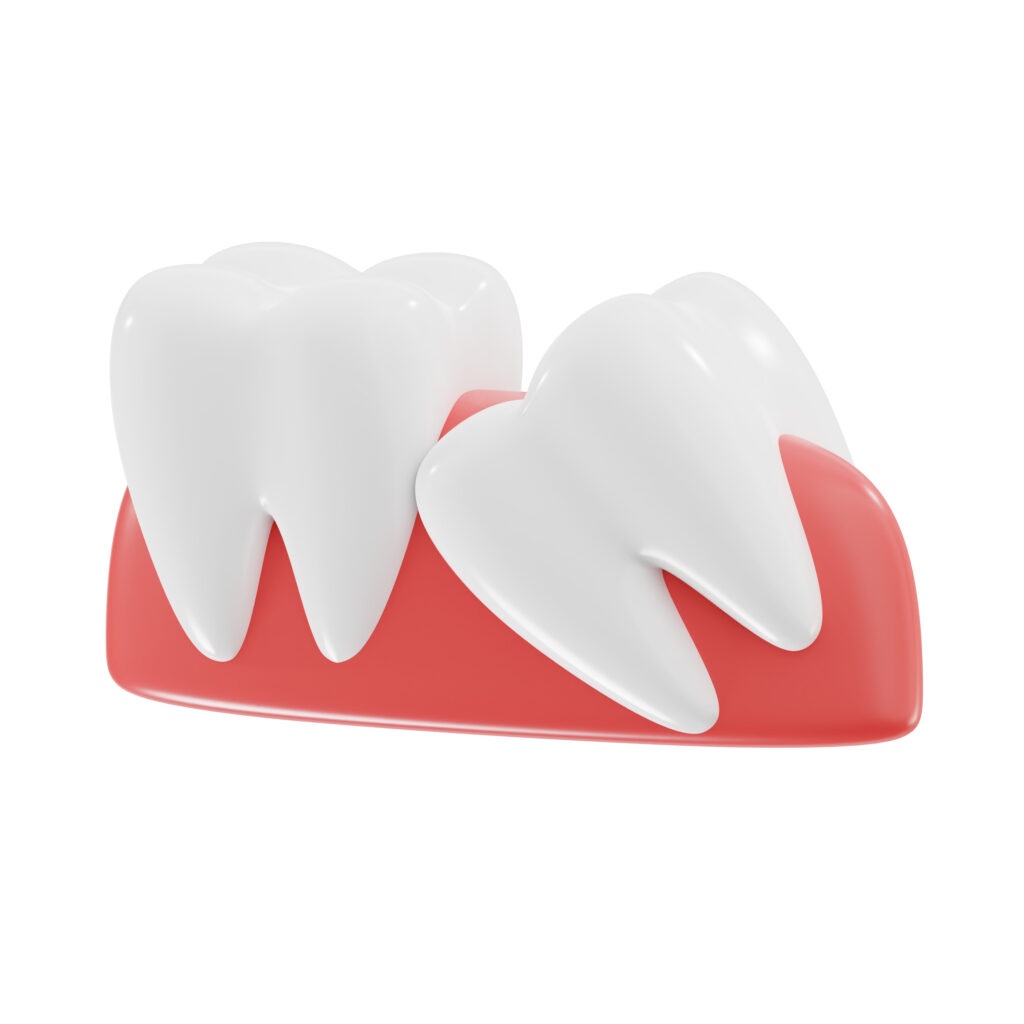
Repeated inflammation
A wisdom tooth that keeps swelling and hurting around it (pericoronitis) tends to recur even after it settles down, and if left alone the inflammation can spread. If it keeps recurring, we recommend having the tooth removed early.
It’s affecting the tooth next to it
If a wisdom tooth that’s come in sideways or at an angle is pressing on or damaging the tooth next to it (the second molar), an extraction is needed to protect that tooth.
It has a cavity that’s hard to treat
A wisdom tooth, set deep in the mouth, is hard to reach with a toothbrush, and can be difficult to treat even once it develops a cavity. Left alone, the cavity can spread to the tooth next to it as well.
It’s getting in the way of orthodontic treatment
If a wisdom tooth is judged to be blocking tooth movement in an orthodontic treatment plan, it may need to be removed.
Cases where a wisdom tooth doesn’t need to come out
It’s come in straight and you can keep it clean
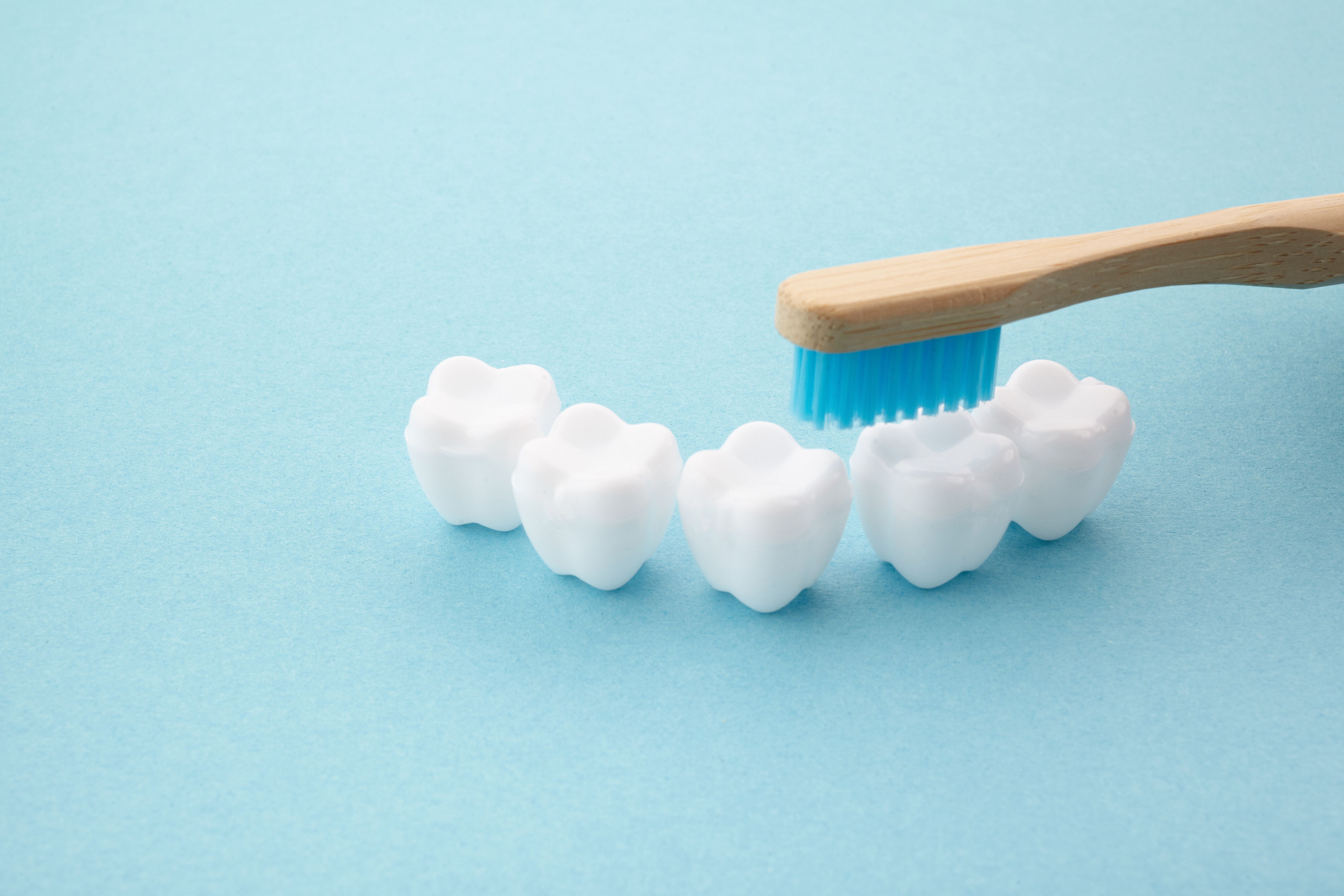
If a wisdom tooth has come in in a normal position, you can keep it clean with daily brushing, and it isn’t affecting the tooth next to it, we may simply keep an eye on it.
It’s fully covered by bone and causing no symptoms
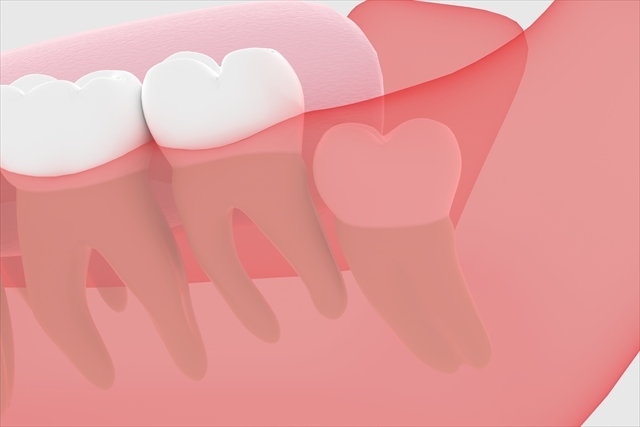
If a wisdom tooth is fully embedded in the bone and not exposed on the surface, we often just watch and wait, as long as it isn’t causing inflammation or affecting the tooth next to it.
Which case applies to your own wisdom tooth is something we judge by examining your mouth and, if needed, a CT scan, so if you’re concerned, please talk to us.
The risk of leaving a wisdom tooth alone

Damage to the tooth next to it
A wisdom tooth that’s come in sideways can keep pressing gradually on the root of the tooth next to it (the second molar). Force applied over a long period can wear away that tooth’s root, or throw off the alignment of your teeth.
Repeated inflammation (pericoronitis)
A wisdom tooth that’s only half emerged through the gum tends to trap debris in the gap with the gum, causing repeated pericoronitis (inflammation around the wisdom tooth). If the inflammation gets worse, the swelling can spread to the jaw or even the neck, so it’s important to deal with it early.
A cavity getting worse
Because a wisdom tooth sits deep in the mouth and is hard to reach with a toothbrush, a cavity can progress without you noticing. It can also spread to the surface where it touches the tooth next to it, meaning both the wisdom tooth and its neighbor can end up needing treatment.
Extraction process

First visit, examination and diagnosis
We ask about your current symptoms and how they developed, and examine your mouth. We take an X-ray or CT scan if needed, and check the direction and depth of the wisdom tooth and its position relative to the nerve.
Explaining our treatment plan
Based on the examination results, we explain whether an extraction is needed, along with what the procedure involves, its risks, the cost and roughly how long it will take. Please feel free to ask about anything that isn’t clear.
Carrying out the extraction
We extract the tooth under local anesthesia. If it’s impacted sideways or embedded, we may need to open the gum and divide the tooth to remove it. Afterward we stitch the site, and go over what to watch for, prescribing medicine if needed.
Removing the stitches and follow-up
If we stitched the site, you’ll come back in about a week to have the stitches removed. We check that it has healed, and that’s the end of treatment if there’s no problem.
Aftercare
Please keep the following points in mind for a smooth recovery after extraction.
Don’t touch the area
On the day of extraction, please don’t touch the area with your tongue or fingers. If the blood clot (the clump of blood that acts like a scab) comes away, it can delay healing. Rinsing hard can also dislodge the clot, so please avoid it.
About eating
Once the anesthesia wears off, start with soft foods and eat a little at a time. We recommend avoiding hard foods on the side you had the extraction until the wound has settled.
Avoid alcohol, exercise and long baths on the day
Alcohol, strenuous exercise and a long bath all promote blood flow and make bleeding more likely, so please avoid them on the day of the procedure.
Dealing with swelling and pain
Swelling and pain can occur after the procedure, but the pain medicine we prescribe settles it in most cases. Swelling usually peaks 2 to 3 days after the procedure, then gradually goes down. If strong pain continues, or the swelling grows bigger day by day, please contact us early.
Price guide
| Item | Price |
|---|---|
| A standard extraction (covered by insurance) | Within insured treatment (a guide for a 30% co-payment: roughly a few hundred to a few thousand yen) |
| Difficult extraction / extraction with a dentist of your choice | ¥33,000 (tax included) *Includes the extraction through aftercare |
| CT scan | ¥3,960 (tax included) |
| Teruplug (a material that promotes recovery after extraction) | ¥11,000 (tax included) |
| Spongel (a hemostatic material) | ¥3,300 (tax included) |
*A difficult extraction or extraction with a dentist of your choice is private-pay (not covered by insurance).
*The cost of an insured extraction varies with what the procedure involves and the number of visits.
*We’ll give you the details after your examination.
Frequently asked questions

Do I always need to have my wisdom teeth removed?
Not everyone needs an extraction. If it has come in straight, you can keep it clean, and it isn’t affecting the tooth next to it, we may just keep an eye on it. On the other hand, if it’s impacted sideways or at an angle and keeps causing inflammation, or it’s affecting the tooth next to it, we may recommend removing it.
Does an extraction hurt?
Because we use local anesthesia during the procedure, you shouldn’t normally feel strong pain. Pain or swelling can occur once the anesthesia wears off, but this can usually be controlled with the pain medicine we prescribe. How much pain you feel varies from person to person, so please contact us if a symptom concerns you.
How long does the swelling last?
For a difficult extraction (impacted sideways or embedded), swelling usually peaks about 2 to 3 days after the procedure, then settles down over about a week. For a standard extraction, the swelling often stays mild. How much swelling you get varies with the difficulty of the procedure and from person to person.
When can I eat after an extraction?
We recommend waiting until the anesthesia wears off, then starting with soft foods and eating a little at a time. Avoid hot or hard foods on the day, and watch out for food getting stuck at the extraction site. Please avoid rinsing hard, as it can dislodge the blood clot.
Is it covered by insurance?
A standard extraction is covered by insurance. A difficult wisdom tooth impacted sideways or lying deep in the jaw (a difficult extraction) may be private-pay depending on your condition. We’ll explain this beforehand, so please don’t worry.